De maakbaarheid van geschiedenis. Over de strijd voor memoriële gerechtigheid in België

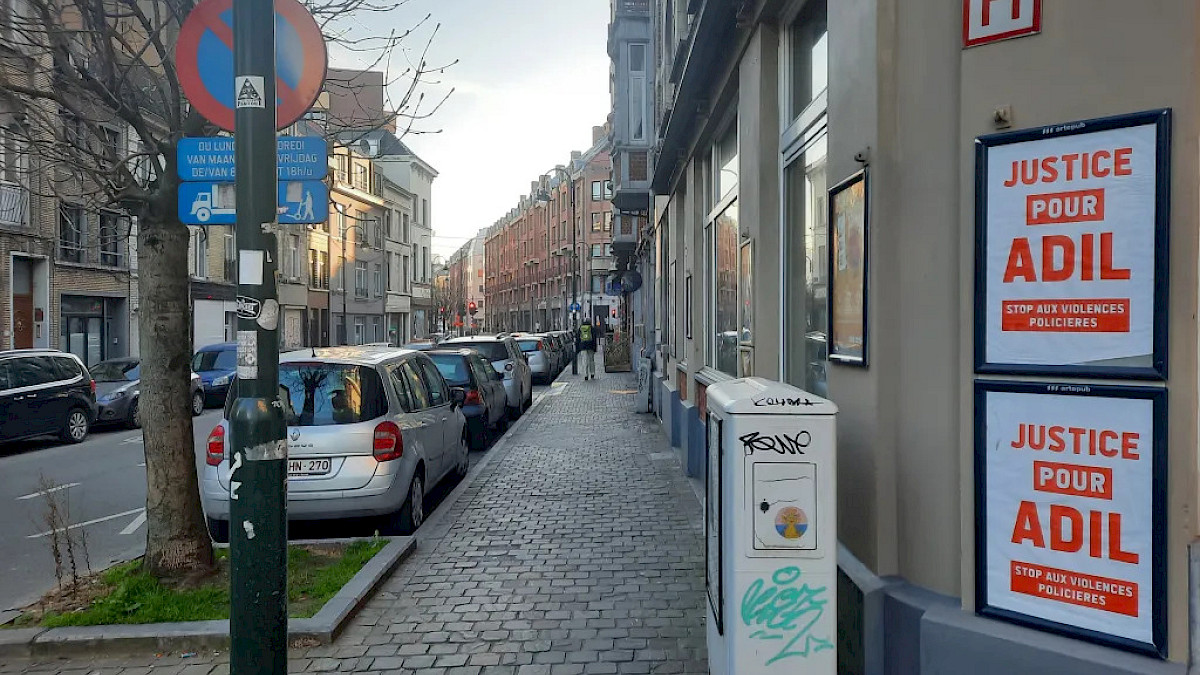
Adil Charrot, Lamine Bangoura, Mehdi Bouda, Dieumerci Kanda, Mawda Shawri, Semira Adamu. Dit waren enkele van de namen om wie gerouwd werd door meer dan 15.000 mensen, gemobiliseerd voor de waardigheid van zwarte levens in het hart van Europa, in juni 2020. De verontwaardiging over de moord op George Floyd en Breonna Taylor door de Amerikaanse politie vond weerklank in Brussel. Het straatnaambordje van de ‘Lloyd George Avenue’ aan de rand van het Zoniënwoud, werd omgedoopt tot ‘F-Loyd George’. Woede en verontwaardiging convergeerden tegen het steeds zichtbaarder wordende dodelijke politiegeweld tijdens de COVID-19 lockdown en het nog steeds levendige structurele racisme, de negrofobie en de islamofobie in het politiekorps en in de brede maatschappij.

“It’s no mystery
We’re making history
It’s no mystery
We’re winning, victory”
Linton Kwesi Johnson (1984)
Adil Charrot, Lamine Bangoura, Mehdi Bouda, Dieumerci Kanda. Mawda Shawri, Semira Adamu. These were some of the names that were mourned, endlessly repeated out loud to demand justice by more than 15.000 people mobilized for the dignity of black lives in the heart of Europe, in June 2020. The indignation brought about by the killing of George Floyd and Breonna Taylor by the U.S. police, resonated up in Brussels. The street sign of the ‘Lloyd George Avenue’ on the edge of the Sonian Forest referring to the former Prime Minister of the United Kingdom was renamed ‘F-Loyd George’. Anger and indignation converged against the increasingly visible lethal police violence during the COVID-19 lockdown and against the still vibrant structural racism, negrophobia and islamophobia in the police corps and in society at large. Street mobilization not only facilitated a deep process of further politicization of existing grass roots anti-racist efforts, but also brought about what Norman Ajari (2020) called a wave of “decolonial iconoclasm”. From the settler colonial states of the U.S., Canada, South Africa over New Zeeland and, Australia to the hearth of Empire in Europe, protests broke the polis in two. The demands for black lives were spontaneously complemented with a collective acceleration and intensification of creative monumental interventions, rendering visible a deep societal antagonism, going beyond the classical left-right opposition. The heroes revered by some, indeed seem to represent clear cut genocide for others. Even if since almost a decade activists are demanding the dismantlement and banishment of key monuments representing the late monarch and owner and ruler of the Congo Free State to the Royal Museum for Central Africa (RMCA), there is no consensus yet about the fate of these colonial relics (Ben Yakoub & Abrassart 2014, Goddeeris 2015) nor about that of the inescapably extractivist and colonial museum in Tervuren (Demart 2020). The public debate seems to sputter and does definitely not live up to the breadth of the unfolding multifaceted global movement of decolonial iconoclam, captured in the spirit of ‘PeoPL’ the ice installation of Laura Nsengiyumva, metling down a real size ice replica of Leopold’s equestrian statue at Trone Square in Brussels (Clette-Gakuba et al 2020).
The main counter argument most often repeated against monumental interventions, is the presumed historical erasure it would enable. Another regular critique insinuates that the ongoing monumental contestation would be merely symbolic, a lightning rod for the real race, class and gender issues at stake. It is difficult to imagine refuting a political demand by the mere counter-argument that language is a purely symbolic structure. Monuments, like images, moreover do not only work on the over-codified elements of a crumbling symbolic order, but also and even more on the imaginary level, which makes them sharp, but at the same time open and dynamic containers of difference in meanings and interpretations, better equipped to adapt themselves to a rapid changing reality and an increasingly worn-out vocabulary too often stuck in a discursive deadlock. In this sense the message of the recent wave of monumental contestation accompanying the black lives matter mobilizations against police violence, marks the last turn of a fundamental paradigmatic shift. As repeatedly argued since Aimé Césaire (1950), it is impossible to understand racism without it entangled histories of enslavement and colonialism. Now thanks to the recent mobilizations and its monumental contestation, it is no longer possible to de-historicize the question of racism or disconnect it from its structural nature and constitutive global histories of subjugation. As Angela Davis (2020) reminds us, these actions demand a serious reflection on the role of historical racism, capitalism and heteropatriarchy in the constitution of our daily contemporary reality. When we understand the recent wave of decolonial iconoclasm beyond its “mere symbolism”, it is impossible not to see how this iconoclastic wave is intimately entangled with the re-emergence of the demand of restitutions (Demart & Robert 2018), but also closely entangled to a renewed demand for reparations (Abrassart & Ben Yakoub 2019, Clette-Gakuba et al 2020).
In this contribution, we want to show how toppling monuments of slave traders and colonial rulers does not entail the erasure of history, quite on the contrary. We argue that the ongoing movements of revolt and decolonial iconoclasm facilitate new forms of remembering, through a clear and collective demand for what Francoise Vergès (2020) calls “memorial justice”. Frantz Fanon (1961) already considered colonization as the fundamental negation of time, as it not only imposed its rule on the present and the future of the oppressed, but also distorted, disfigured and destroyed the past of the colonized. Albert Memmi (1965) later noticed how the colonized is pushed out of the game and is no longer considered a subject of history as in the movement of expulsion s/he is objectified as a body out of place and develops an inferiority complex towards their own supposedly pre-modern tradition. The colonized are always a people without history, outside of time, or whose time is radically out of joint and therefore has to be gently lead into History.
Hence, you do not erase history by contesting colonial monument, on the contrary. You erase history by the destruction, accaparation, or appropriation of heritage of others, by the theft of objects of worship, ritual or simple use transmitted from generation to generation (Sarr & Savoy 2018). You erase history by willfully setting up missions to christianize, civilize, modernize, develop or democratize occupied, mined and exploited territories. You erase history by actively crushing the social fabric of local communities, ways of being in the world and by actively uprooting different forms of ancestral knowledge systems, by actively engaging in processes of epistemicide (de Sousa Santos 2015). You erase history by teaching your own national history, moral and religious beliefs in self-constructed pedagogical infrastructure in the territories you colonize. You erase history by writing revolt against enslavement and colonization out of the history and thus by silencing past revolts and anti-colonial struggles (Trouillot 1995). You erase history by the ensuing racial alienation and deculturalization of colonized populations. You further erase history by the dilatory dilapidation and molding of colonial archive (Ceuppens 2020). You finally erase history by neurotically defending the innocent civilizational and at times revisionist legends represented by colonial monuments rejoicing modernity, silencing its colonial legacies, genocides and crimes against humanity, not by questioning them.
Hence, the collective contestation of colonial statues does not entail the expurgation of history. As we will show, the contestation of these statues brings about the emergence of a deeply historical space where colonial histories vehemently re-emerge and can be fundamentally discussed and reconsidered. So it facilitates a dialogue and brings to light forgotten and actively silenced histories. As we will see, not only the monumentalisation of the genocidary stories of Leopold 2 and its contestation comes to light (Stanard 2011), also the role of late king Baudouin, General Storms or Baron Dharis is rendered legible, moreover different figures of dissent appear on the stage of history, such as Patrice Emery Lumumba or Lusinga Iwa Ng’ombe. By engaging in discussions of memorial justice, we are not erasing history, we are making history.
1. Leopold too must fall
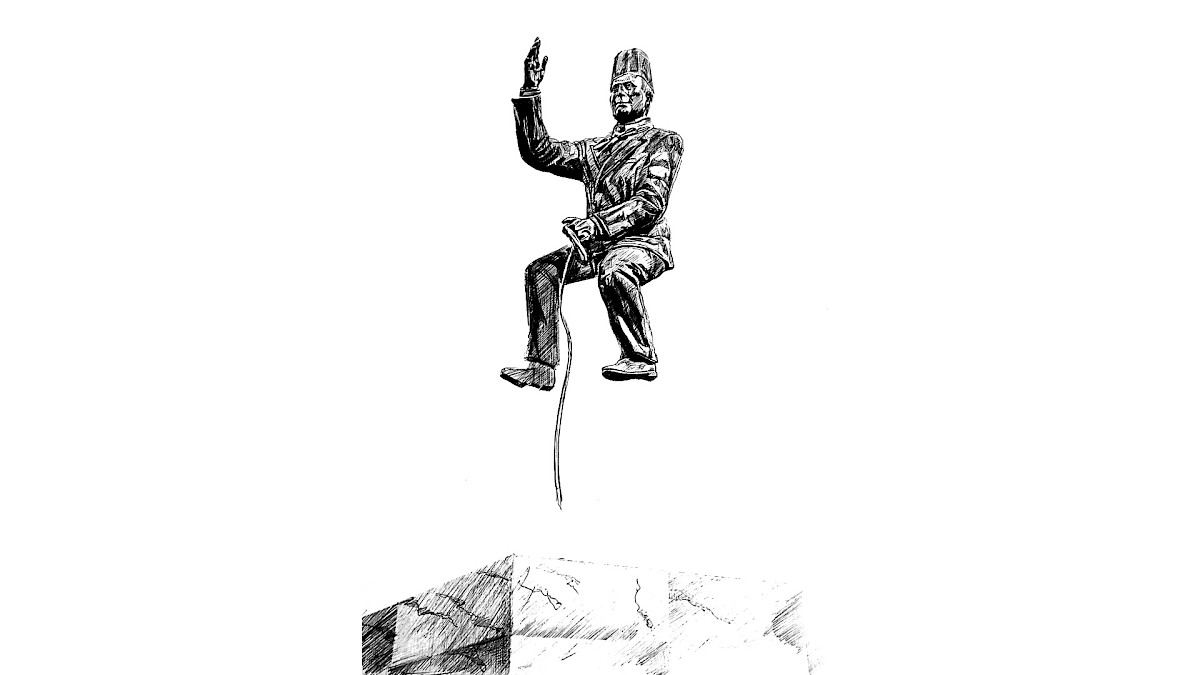
The statue in honor of Leopold II in Ekeren, a northern district of the municipality of Antwerp, was probably the first statue erected in honor of Leopold II, but also the first colonial statue to be toppled in Belgium’s history. The statue in front of the church on the central market place sculpted by Joseph Ducaju, shows a young and proud king in military uniform, standing upright, with a helmet in the left hand, and a document in the right hand. It was erected in memory of a brief visit of Leopold II to Ekeren, passing by when visiting the army camp of Brasschaat in 1869. Inaugurated in 1873, while the king was still alive, it is most probably the very first statue erected in honor of the king in Belgium.
As since 2007 the statue of Leopold II was doused several times in red paint, the district administration refused to remove the statue as it would amount to erasing the past, but decided in 2018 to place an information board instead next to the statue that historically contextualized the monument. Formulated in consultation with the RMCA, it underlines the statue was erected twelve years before Leopold II acquired personal control over the Congo Free State. It also mentions that the rubber and ivory exploitation went in pair with violence that resulted in an uncountable drop in the number of Congolese people. The explanatory plate ends with emphasizing the commemoration of the victims of colonization by the inhabitants of Ekeren. Later in 2019 the statue was officially protected as established architectural heritage.
Nevertheless, in the night of May 16th 2020, almost a week before the assassination of George Floyd by the Minneapolis police and the ensuing worldwide movement for black lives, the pedestal was tagged with a swastika and the words “Heil” and “Congo is ours”, the statue of the king was decorated with SS signs, another swastika on its right upper arm and a toothbrush style moustache in black paint. The line “Cut of these little hands. Grab the Diamonds. The Congo is ours’ gained public attention and popularity during the summer of 2018 when it was song while two black women were violently beleaguered, assaulted and humiliated during a concert of Kendrick Lamar at the Pukkelpop festival. The phrase originally comes from an unofficial canteen song chanted in student clubs over different universities in Flanders, which attract a majority of conservative and (alt-) right wing students. The same night, different garbage cans and a playground in the vicinity were vandalized. A memorial for those fallen in the First World War in the city centre was also decorated with a swastika. Hardly had the Nazi tags been removed, or the coarse-grained sandstone statue was doused again in red paint and three days later set on fire, after which the municipality decided to dismantle the statue and place it in the depot of the Middelheim Open Air Sculpture Museum, a sculpture park in Antwerp.
The first toppled Leopold II statue joined the Baron Dhanis monument, another dismantled bronze colonial monument resting in Middlheimpark. Commanded by the ‘Cercle Africain d’Anvers’, it was originally erected in front of the St. Michael Church in 1913 in Antwerp. Sculpted by Frans Joris, the monument shows the lieutenant and commander of the Force Publique in the Congo Free State responsible to fight the Belgo-Arab war, with a triumphant raised rifle above a bowing Arab putting down his flag to surrender. The military victor holds a protective hand over an enslaved Congolese women with a child, symbolizing the campaigns of the Belgium colonial army against the Arab slave trade in name of humanity and civilization, all the while silencing the actual military rivalries with local Zanzibari Arab merchants and sultans over the ivory and slave market. The monument showing the “Flemish race” was still “a race of heroes” was moved by the city council, to make way for increased car traffic in 1954 and finally ended in the Middelheim Museum where it still stand until today (Catherine 2006). After having captured the three most important Arabic strongholds in Congo, Dhanis raised Antwerp to one of the most important ivory ports in the world and was made vice-governor of the colonial state. Back in Belgium he was included in the peerage as a baron and accumulated his capital in the tyrannic red rubber industry, notorious for its forced labor its excessive use of violence, reinstalling a ruthless system of slavery (Renton, Seddon & Zeilig 2007).
The symbolism of the Dhanis monument reminds us that of the monument for the Belgian pioneers in the Brussels Cinquantenaire, sculpted by Thomas Vinçotte and inaugurated in 1921 in honor of the “civilizing efforts” of Leopold II in Congo. The left side of the monument shows a group of Arabs throwing an enslaved black man on the ground, but subjected by a Belgian soldier. The inscription reads: “Belgian military heroism destroying an Arab slave owner”. As many Muslims who had to pass by the monument since the construction of the Great Mosque felt offended, the word “Arab” was officially chiseled in the 1980s. The inscription was restored and taken away several times, throughout the last decennia, but was last restored by two young popular alt-right politicians during the latest protests in June 2020.
There is no doubt Arab occupation facilitated Belgium colonialism, Arab imperialism, like any other imperialism, has to be firmly condemned (Fanon 1961). The colonial propaganda rendering relative colonial racism by comparing it with Arabic slave trade however, finds manifold contemporary iterations as a modern expression of widespread Islamophobia (Matthys et al 2020). As reminded by Houria Bouteldja (2020) even though racism is built on one unique global pillar, it is compartmentalized and always declined on a national scale according to specific groups that must be kept out of the racial pact, organizing competition instead of bridging what Fanon (1961) called the most corrupt colonial division, that between White and Black Africa. The still very present colonial divide and rule logic still functions to hollow out possible solidarities between different communities in Belgium, dividing the anti-colonial scenery in their struggle against police violence and racism in Belgium (Rutazibwa 2020, Womba-Konga 2020). Having partly been addressed internally during different public debates before June 2020, these divisions were for the most part bypassed as people united in the streets to dismantle colonial power and its deadly war machine, simultaneously demanding justice for Adil Charrot and Lamine Bangoura, Mehdi Bouda and Dieumerci Kanda. Mawda Shawri and Semira Adamu.
The confluence of militant energy over deeply engrained colonial divisions, guaranteed that the toppling of the royal statue in Ekeren, would be repeated in different cities over the country. After a nightly intervention in Auderghem Brussels, the local Leopold bust was hammered down. Although the city council of Ghent was better prepared, the bust in South Park was also overhauled and later taken from its pedestal by the council on the 60th anniversary of Congo independence and is likely to be stored in The Museum of Industry, Work and Textiles. The city council of Leuven followed suite and took off a statue high on a tower of the town hall, very few knew it actually existed. Hasselt, Sint-Truiden, Oostende, Tervuren, Halle, Monse, not a lot of cities in Belgium were spared by the wave of decolonial iconoclasm.
2. Patrice Emery Lumumba

Most of the iconoclastic energy was directed at Leopold II, but it would be an error to oversee different other statues that were creatively addressed. Case in point was the embellishment of the bust of late King Baudouin with red paint, the color of the blood spilled by the victims of colonization of Congo, during a nightly escapade of a group of activists in the park of the Saint-Michel cathedral in the center of Brussels. In the speech of the last colonial sovereign according independence and international sovereignty to Congo on June 30th 1960, he reduced the proclaimed independence to the culmination of the courageous and perseverant work of King Leopold II and framed it as the crowning of his great work of civilization, emphasizing all along the benefits of colonization for an independent country now on the road to development, to finally propose a constructive, complementary and fruitful future cooperating. The royal speech of independence only mentioning the merits and goods of colonization was countered by the now historical speech of Patrice Emery Lumumba, speaking truth to power. Seven months later, the first leader of the newly independent country was assassinated. After the journalist Ludo De Witte (1999) held the Belgian government responsible for the assassination of Lumumba, a parliamentary commission, who had to determine the exact circumstances of the physical neutralization, showed the implication and moral responsibility of certain members of the Belgian government and other Belgian figures in the circumstances which led to the killing of Lumumba (Omasombo Tshonda 2002). King Baudouin seemed to have been aware of the plans of Katangese separatists to get rid of Patrice Emery Lumumba but did nothing to stop it. Incriminating evidence was disclosed that showed he had endorsed the plan to kill Lumumba by plausible deniability.
In the wake of the parliamentary commission, activists started to direct their attention to the present but for most until then almost invisible relics of Belgium’s colonial past in public space (Ben Yakoub & Abrassart 2016). In 2008 anthropologist Bambi Ceuppens (2008) observed that most of the actions around colonial monuments were carried out by white activists and thus only very few Belgian-Congolese were involved. The latter by contrast would be more engaged in paying an annual tribute to the graves of their compatriots who passed away in the Human Zoo set up during the 1897 Brussels International Exhibition. Here however, Ceuppens dismisses the hidden transcripts (Scott 1990) circulating in Congolese diasporic spheres, probably since Patrice Lumumba had the “honor” as an accomplished “évolué” to lay a flower wreath at the foot of the royal statue in the center of Brussels in 1955 as a sign of gratitude for the king’s “civilising work” that helped his nation to “progress” and “prosper”. Nevertheless, this divergence highlighted for Ceuppens the absence of a real debate on Belgium’s unfinished colonial history, and could best be explained by the general invisibility and absence of Congolese in debates on a shared colonial past. This, however fundamentally changed the last decade with the abiding power of artist, activists and collectives, such as Decolonize Belgium, Memoire Colonial, Change, La Nouvelle Voix Anti-Colonial, Collectief No Name, A.C.E.D., Bamko-Cran and many others. A first victory of this mobilization was the installation of square in honor of Patrice Lumumba. For the 58th anniversary of Congolese independence, it was inaugurated at the entrance of Matongé, the Congolese neighborhood of Brussels. The inauguration took place in the presence of members of the family of the former independent Belgian Congo Prime Minister. The Congolese diaspora and their allies have struggled to obtain this symbolic gesture of the city council. Patrice Lumumba is generally recognized as one of the most important leaders for the struggle for liberation of Congo and of the wider pan-african movement, until he was murdered on January 17, 1961 in the province of Katanga, with the complicity of the CIA, British MI6 and the Belgian government. Like the unfinished process of decolonization he embodies, Lumumba’s unresolved legacy produced a powerful afterlife, as he lives on as an unmissable icon in the arts and hearts of many (De Groof .2020). January, 17th 2014 artist Pitcho Womba Konga launched Congolisation, an arts festival that emerged from a re-enactment of the speech of Lumumba in ‘Horloge du Sud’, but grew into an annual appointment holding space for the remembrance of the legacy of all those who sacrificed their life in the struggle for decolonization.
Following a request from Lumumba’s family almost 60 years after his assassination and after the assassination has finally been qualified as a war crime by the Brussels court of appeal, Belgian federal prosecutors are investigating whether they can bring charges against two persons suspected of taking part in the killing of Congo’s first leader, as a tooth belonging to Lumumba was found by the family of one of the suspects. In a letter to King Philippe on the 60the anniversary of independence, Juliana Amato Lumumba, the daughter of Patrice Lumumba asked the king to return his “relics” in the name of the family to “the land of his ancestors”.
3. Lusinga Iwa Ng’ombe

With the re-emerging monumental contestation in the wake of the movement for black lives, Ixelles Mayor announced it would move the bust of General Émile Storms from Meeûs Square to the RMCA, before the 60th birthday of independence. The announcement came as a small victory, certainly for Kalvin Soiresse who is actively setting the agenda for memorial justice already a decade now, first as one of the founding members of collective Memoire Coloniales, now as elected representative within the Brussels Parliaments and the Wallonia-Brussels Federation. However it has received numerous similar request by different municipalities in the last years, it is the first time the RMCA has accepted to receive a contested colonial monument. It already houses a replica of the bust of General Storms as part of a showcase of seized and stolen memorabilia dedicated to the general before the renovation of the museum, which already offered several elements for its possible contextualization. Negotiations should have taken place between the municipality and the RMCA, but due to a disagreement on who should bear the cost of the relocation, the deadline was not met (Mukuna 2020). The bust still stands there today, upright and proud, but like its king, doused in red paint by activist not at all constrained by administrative or procedural thresholds of official heritage policies.
Storms commanded the 4th expedition of African International Association, a private company chaired by King Leopold II, exploring the east coast of Africa. Like Stanley, he was a central figure in the colonial enterprise charged with expanding the territory of what would become the Congo Free State, at the end of the 19th century. The establishment of military outposts on the land of the Tabwa in the Lake Tanganyika region, was not met without resistance and resulted in severe war crimes and crimes against humanity committed – but never condemned – by the Belgium colonial army, in the name of civilization. Lusinga Iwa N’Gombe, head of the Watombwa people and one of the leaders of this resistance had his head cut off during a punitive expedition lead by Storms. But resistance persevered, and the fort Storms had built in Mpala was set on fire, after which he received the orders to quit his mission and pack his bags back to Belgium. The skull of Lusinga and two other leaders, Mpampa, the prince of Itawa and Malibu, the king of Marungu, were numbered, labeled and brought to Storms private house as personal war trophies. After Storms’ death, the three skulls were brought to the RMCA, to finally end in a cardboard box at the Royal Belgian Institute of Natural Sciences, together with about almost 700 human remains, mainly skulls and bone fragments, but also a couple of skeletons from Africa, Asia, America and Oceania.
In the 19th century, a skull was not only considered a war trophy, but also biological evidence of racial superiority in the field of craniometrics and physical anthropology (Coutenier 2005). When the skulls were brought to Belgium, they were first exhibited to an audience of the Société d’Anthropologie de Bruxelles, during which Professor Emile Houzé gave a anthropometric presentation, as he found in his classification of native skulls proof of the presupposed inferiority of certain well-defined human races, and could for instance distill the cruel, greedy and vindictive character of Lusinga on the basis of his objective measurements. When brought to the RMCA, the skulls were included in a collection of anatomical anthropology consisting of 289 other skulls, but also 12 preserved fetuses and 8 skeletons.
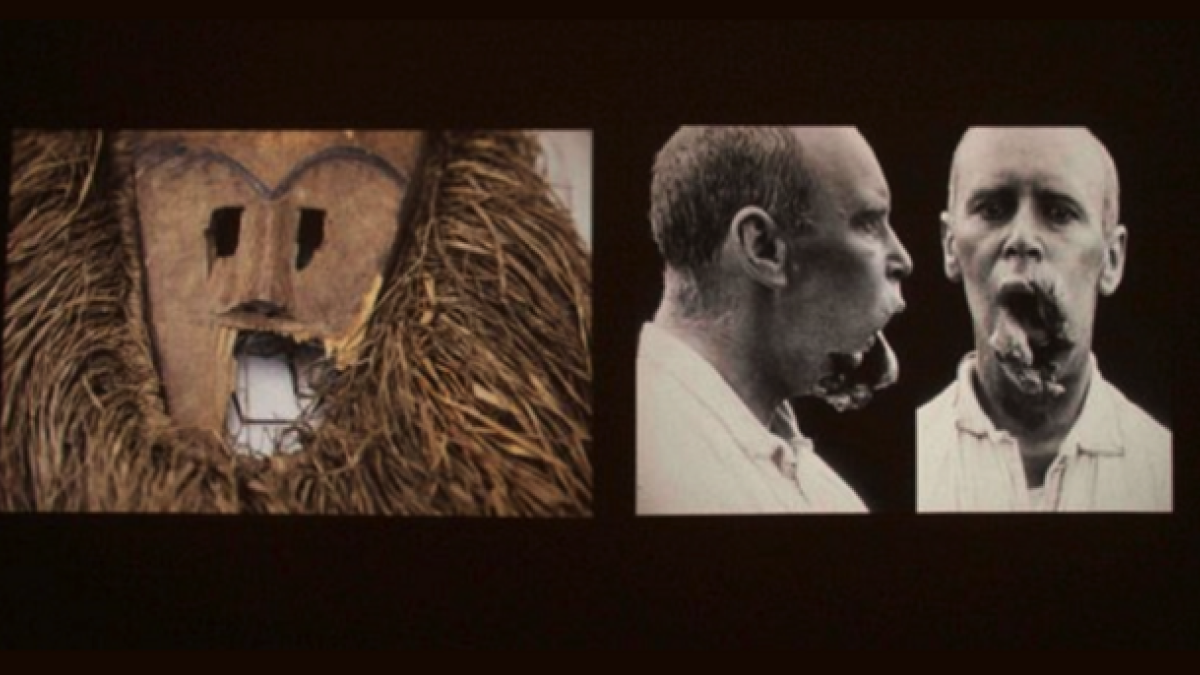
Toma Muteba Luntumbue was one of first to shed light on the marble bust and the dubious legacy of the publicly commemorated general and leading officers of Belgium’s colonial enterprise. For a 2002 documentary questioning the role of the RMCA, he covered Storms’ bust with a blood-red cloth, interrogating its public glorification. Two years earlier, as guest-curator for contemporary arts for the ‘Exit Congo Museum’ exhibition at the RMCA, together with Boris Wastiau (2000) he had already questioned the provenance of objects and human remains related to the violent histories of among others, General Storms. The recovery of the skull is a consequence of the confluence of worldwide dispersed attention, rendering sensible again a human remain lost in a museum store room (Arndt 2013). For his research on Tabwa art, Allen Roberts (1985) first asked Boris Wastiau to localize the skulls. Later, Maarten Coutenier (2005) further looked into the matter for his research on physical anthropology and the ethnographic museum. In Allers et retours (2009), Sammy Baloji rendered visible again the skull of chief Lusinga by turning anthropometric photography against itself. This collective excavation, was continued by Michel Bouffioux (2018) who retraced the route of the three skulls.
As reported by Bouffiaux (2019), Thierry Lusinga NGombe also requested in a letter to the king in October 2018, the return to Congo of the remains of his alleged ancestor so it could find a decent burial and rest in peace, but his demand has not been followed up by government officials. Nonetheless, scientists from the University of Lubumbashi are preparing a request for collective restitution, actively involving representatives of the Tabwa community so Chief Lusinga can finally return to the region where he lived and be buried with the respect due to his rank, close to other customary chiefs.
Storms’ spoils of war consisted of the three skulls, but also several statuettes and other artefacts that served as a testimony trophies of his military conquest. After having stayed in a showcase in the general’s private residence, the statues were donated to the collections of RMCA (Wastiau 2000). One of the stolen statues represents an ancestor of Lusinga, another the chief Monda, two others the Tabwa chief Kansabala and his wife. Even after the renovation of 2019, some of these objects acquired during violent colonial expansion are still on display.
The recent wave of decolonial iconoclasm facilitated a re-emergence of the demand for restitutions. These demands were first pronounced since the actual accaparation of landmark heritage objects in the 19th century, but were also part and parcel of the process of decolonization in the 1960’s (Van Beurden 2015). The current conversation on restitutions, re-emerged after Benin asked to return looted object stored in musée du Quai Branly in 2016. A report on restitution reminding France that 90 % à 95 % of Africa’s material heritage is conserved outside the African continent, got the ball rolling again in Belgium (Sarr & Savoy 2018). The reorganization and reopening of the RMCA, shed a renewed light on the accaparted/looted cultural artefacts inhabiting the museum, as demands for restitution were pushed by different activist’s collectives, such as Bamko-Cran. In March 2019 French Brussels Parlement voted almost unanimously a resolution «on the restitution of human remains and cultural goods of the colonial period» and in November 2019 during the inauguration of newly instituted National Museum in Kinshasa Félix Tshisekedi pronounced himself in favor of a progressive, organized and concerted procedure of restitution of cultural property.
Conclusion

After the national demonstrations for black lives in Brussels, the word “Pardon” was tagged in white paint on the chest of Leoplold II, blinded with red paint still sitting on his horse on Troon Square. The word ‘Reparation’ was also added with red on the back of the pedestal of the defaced bust of late King Baudouin in front of the Saint-Michel cathedral. Later, on the 60th anniversary of Congolese independence, King Philippe, the nephew of the last colonial sovereign of Congo, expressed his “deepest regrets” for the brutality and cruelty of a painful colonial past in a letter to the Congolese president Félix Tshisekedi. A formal apology for colonial crimes against humanity that would allow for the acknowledgment and compensation for past mishandling and exploitations that still reverberates in the present, is left unsaid. The monarch however added that he would “continue to fight against all forms of racism” and further “encourage the reflection begun in our Parliament to come to terms with the past, once and for all”. The Belgian Chamber of Representatives later confirmed the proposition to set up a Belgian ‘Truth and Reconciliation Commission’ to research the Belgian colonial past in Congo Free State (1885-1908) and Congo (1908-1960), Rwanda and Burundi (1919-1962), its historical and contemporary impact and consequences. A special committee is commissioned to clarify Belgium’s colonial past, examine the structural and economic impact of colonization, the ways in which Belgium benefited from oversees exploitation. It was also mandated to formulate recommendations on how to deal with the past and work out proposals for reconciliation. It will furthermore have to advise on how academic research on (post)colonialism can be stimulated, with special attention to the disclosure and preservation of colonial archives. It was also commissioned to look to what extent symbolic actions such as the removal or contextualization of colonial statues, the official offering of public recognition and apologies or building memorials for the victims of colonization can have a conciliatory effect. The expert group was also appointed to say if the restitution of stolen heritage can impact existing racism and look into the legal and financial consequences of involving victims of colonization in the investigation. Following the first steps taken by the city council of Ghent and Leuven on the question of decolonization, the Brussels State Secretary for heritage and urban planning has also issued a call for a special working group on the presence of colonial symbols in public space. The working group will have a mandate of one year to work on a short and long term action plan for the Brussels-Capital Region. The action plan will eventually serve as a proposition to the Government of the region, concerning possible changes in urban toponymy, the contextualization of colonial symbols in public space, but also the restitution of human remains. It was also mandated to advice on the desirability of a memorial for decolonization.
As Olivia Rutazibwa, who refused the invitation to be part of the national expert group, warns us in her declination letter, the Special Commission of the Belgian Parliament risks to become a mere “cosmetic operation at the service of the status quo” maintaining rather than decolonizing what she calls the “White World logic”. In Belgium, there is indeed a long tradition of “encommissioning” political problems in order to produce majority consensus or to dismember and divide them (Clette-Gakuba et al. 2020). From the moment the revolted street politics demanding memorial justice are incorporated and translated into new official political bodies, like expert groups, working groups or commissions, the historical space opened by the struggle for memorial justice and the wave of decolonial iconoclasm risks to rapidly close down. New insights, new collective constellations and solidarities can be blocked from the political game. As reminded by Angela Davis (2020) the iconoclastic revolt opens up possibilities to demand to abolish existing institutions and fundamentally re-envision and create new ones that can cater general needs in new inclusive ways. Grass roots organizing from outside these newly founded official political structures will remain vital in the struggle for memorial justice. Next to the colonial archives, archives of international solidarity and anti-colonial struggle should also be excavated, linking pan-african and pan-arabic struggle against colonialism and imperialism to inspire necessary solidarities in the contemporary revolts demanding memorial justice.
Nevertheless, it is by now hopefully clear that the wave of decolonial iconoclasm accompanying the revolts for black lives and against police violence cannot be reduced to merely symbolic interventions. More than a lightning rod, it should be grasped as a productive imaginary structure of seeing, feeling and knowing that renders intelligible the actual issues at stake from a historical perspective, beyond the discursive deadlock blocking necessary debates on racism, negrophobia and islamophobia. It demarcates a fundamental paradigm shift, rendering it impossible to talk about racism without its entangled histories of enslavement and colonialism, making room for the re-emergence of the demand of restitution and reparations to resonate loudly. The toppling of monuments and statues of colonial rulers, slave traders, military general and lieutenants does not entail the erasure of history. On the contrary, the ongoing movements of revolt and decolonial iconoclasm facilitate new forms of remembering through a clear demand for memorial justice. It rearticulates history from below, by rendering intelligible and visible again, silenced past, facilitating the re-emergence of almost erased but resistant ways of knowing and being in the world. It renders visible the colonial legacies, genocides and crimes against humanity, hiding behind revisionist legends that these colonial monuments represent. The struggle for memorial justice and the wave of decolonial iconoclasm facilitates the emergence of a deeply historical space where never forgotten histories passionately re-emerge to be further deliberated and reconsidered. By engaging in memorial justice, we are not erasing history, we are making history and winning victory.
References
Abrassart, Gia & Ben Yakoub Joachim (2019) Le temps des réparations est arrivé, également en Belgique? 03/09/2019. CADTM. www.cadtm.org
Ajari, Norman (2020) La pensée décoloniale casse la République en deux. Interview by Rachida El Azzouzi. Mediapart. 13/06/2020. www.mediapart.fr
Arndt, Lotte. “Vestiges of oblivion–Sammy Baloji’s works on skulls in European museum collections.” Darkmatter Journal (2013).
Ben Yakoub, Joachim & Abrassart, Gia (2016) La chasse aux spectres monumentaux dans la Belgique-Congolaise, in Sarah Demart and Gia Abrassart, eds, Créer en postcolonie. Voix et dissidences belgo-congolaises 2010-2015, 2016, pp 131 -140
Bouffioux, Michel (2018) L’histoire que nous raconte le crâne de Lusinga. Paris Match Belgique. 21/03/2018. www.parismatch.be
Bouffiaux, Michel (2019) Crâne de Lusinga : une première demande de restitution congolaise. Paris Match Belgique. 22/02/2019. www.parismatch.be
Catherine, Lucas (2006) Wandelen naar Congo. Langs koloniaal erfgoed in Brussel en België, Antwerpen: Epo.
Césaire, A. (1950 [2004]). Discours sur le colonialisme. Paris: Présence africaine
Ceuppens, Bambi (2008) ‘Les monuments coloniaux: Lieux de mémoire contestés’, Presentation pour le CADTM (Comité pour l’Abolition des Dettes illégiTiMes), Brussel, SETCA, 27 september 2008.
Ceuppens, Lien (2020) Verwaarlozing koloniale archieven vernietigt geschiedenis. Apache. 22/06/2020 www.apache.be
Clette-Gakuba, Véronique et al. (2020) Conditions minimales pour une décolonisation de l’espace public. Mediapart. 24 JUIN 2020. https://blogs.mediapart.fr
Couttenier, Maarten. Congo tentoongesteld: een geschiedenis van de Belgische antropologie en het museum van Tervuren (1882-1925). Acco, 2005.
Davis, Angela (2020) Toppling of Confederate Statues Reflects Reckoning with Slavery & Historical Racism. Democracy Now. 12/06/2020. www.democracynow.org
De Groof, Matthias, ed.(2020) Lumumba in the Arts. Leuven University Press
de Sousa Santos, B. (2015). Epistemologies of the South: Justice against epistemicide. Routledge.
De Witte, Ludo (1999) De moord op Lumumba. Leuven: Uitgeverij Van Halewyck.
Demart, Sarah & Robert, Mireille-Tsheusi (ed.) (2018) Musées coloniaux et “resitution” des tresors africains. Dossier Special Bamko-Cran. www.bamko.org/post-colonial
Demart, Sarah “Resisting extraction politics: Afro-Belgian claims, women activism, and theRoyal Museum for Central Africa” in Margareta von Oswald and Jonas Tinius, Across Anthropology: Troubling Colonial Legacies, Museums, and the Curatorial (Leuven: Leuven University Press, 2020).
Goddeeris, Idesbald. “Colonial Streets and Statues: Postcolonial Belgium in the public space.” Postcolonial Studies 18.4 (2015): 397-409.
Johnson, Linton Kwesi, (1984) Making history. London: Island Records.
Mathys, Gillian, Van Beurden Sarah, Loffman Reuben, Vanhee Hein and Goddeeris Idesbald (2020) Gebruik historici niet als excuus in de discussie over excuses aan Congo. De Morgen. 16/06/2020 www.demorgen.be
Mukuna, Olivier (2020) Storms: du non-débat au coup de com. 30/05/2020. www.oliviermukuna.canalblog.com
Omasombo Tshonda, Jean. 2002. Commission Lumumba: Difficile regard sur un passe: Association Belge des Africanistes. Forum 22(March):10-13
Renton, David, David Seddon, and Leo Zeilig. The Congo: plunder and resistance. Zed Books, 2007.
Roberts, Allen F. (2013) A Dance of Assassins: Performing Early Colonial Hegemony in the Congo. Indiana University Press, 2013.
Roberts, F. Allen & Evan M. Maurer (1985). Tabwa: The Rising of a New Moon, a Century of Tabwa Art. Univ of Michigan Museum of Art, 1985
Rutazibwa, Olivia (2020) “Congo” Commissie – why I will not participate in the expert group. WordPress Olivia U. Rutazibwa. 21/06/2020 www.oliviarutazibwa.wordpress.com
Sarr, Felwine, and Bénédicte Savoy. Restituer le patrimoine africain. Philippe Rey, 2018.
Stanard, Matthew (2011) “King Leopold’s Bust: A Story of Monuments, Culture, and Memory in Colonial Europe.” Journal of Colonialism and Colonial History 12.2 (2011).
Trouillot, Michel-Rolph. Silencing the past: Power and the production of history. Beacon Press, 1995.
Van Beurden, Sarah. “The art of (re) possession: heritage and the cultural politics of Congo’s decolonization.” The Journal of African History 56.1 (2015): 143-164.
Wastiau, Boris. (2000) Exit Congo Museum. Musée Royal de l’Afrique Centrale, Tervuren
Womba-Konga, Pitcho (2020) Carte Noire, Jaune, Rouge. Facebook. 06/06/2020. www.facebook.com