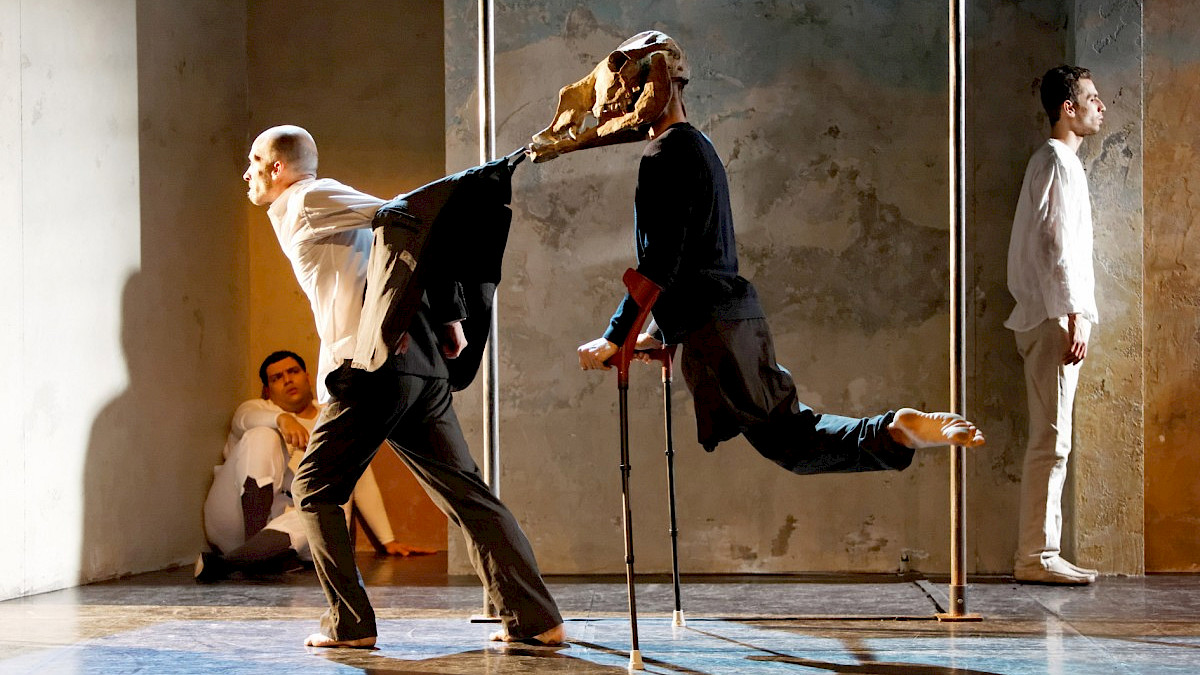
(Re)framing the vocabulary in performing arts in Flanders
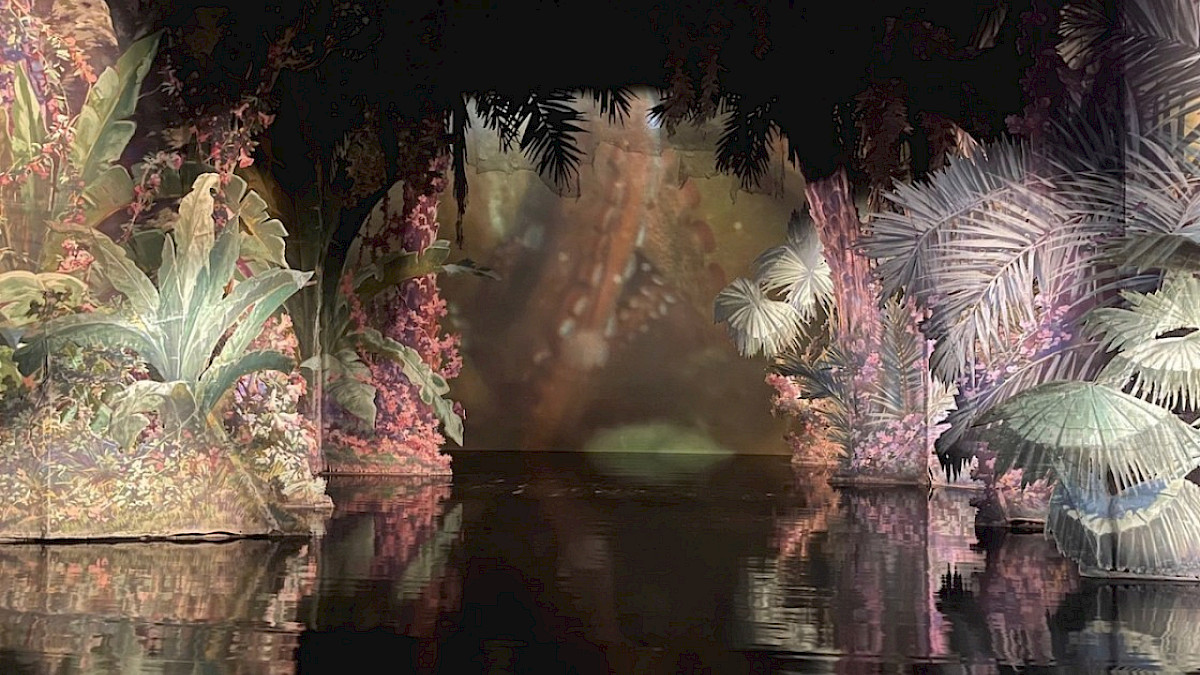
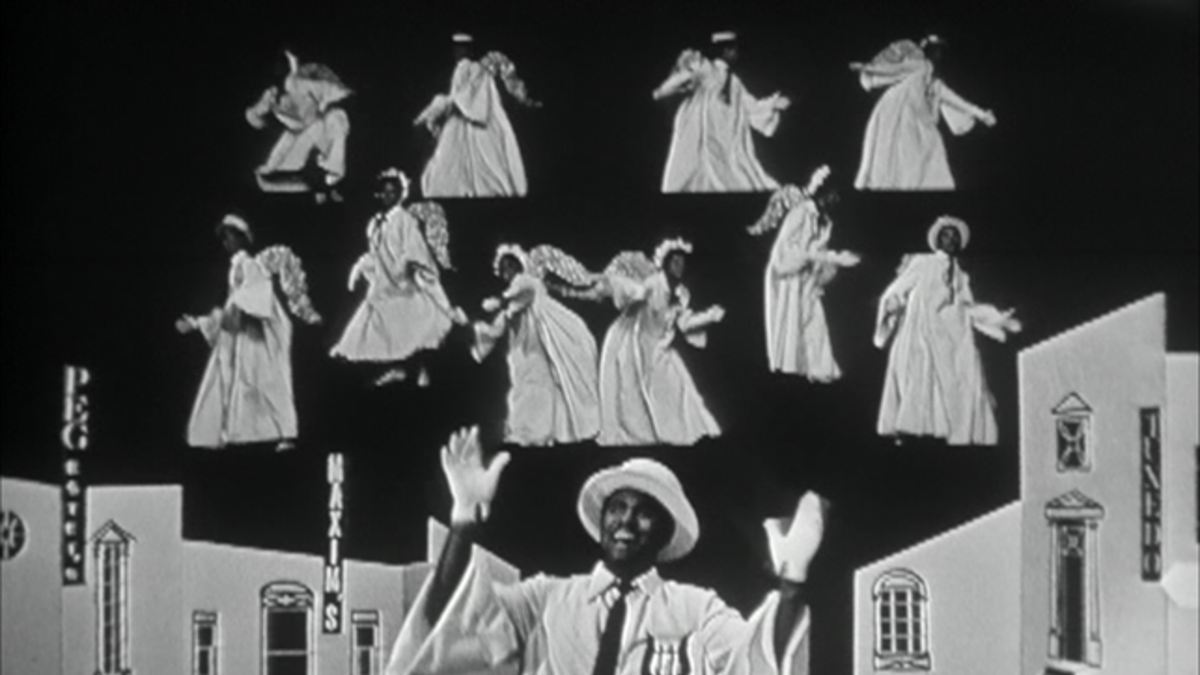
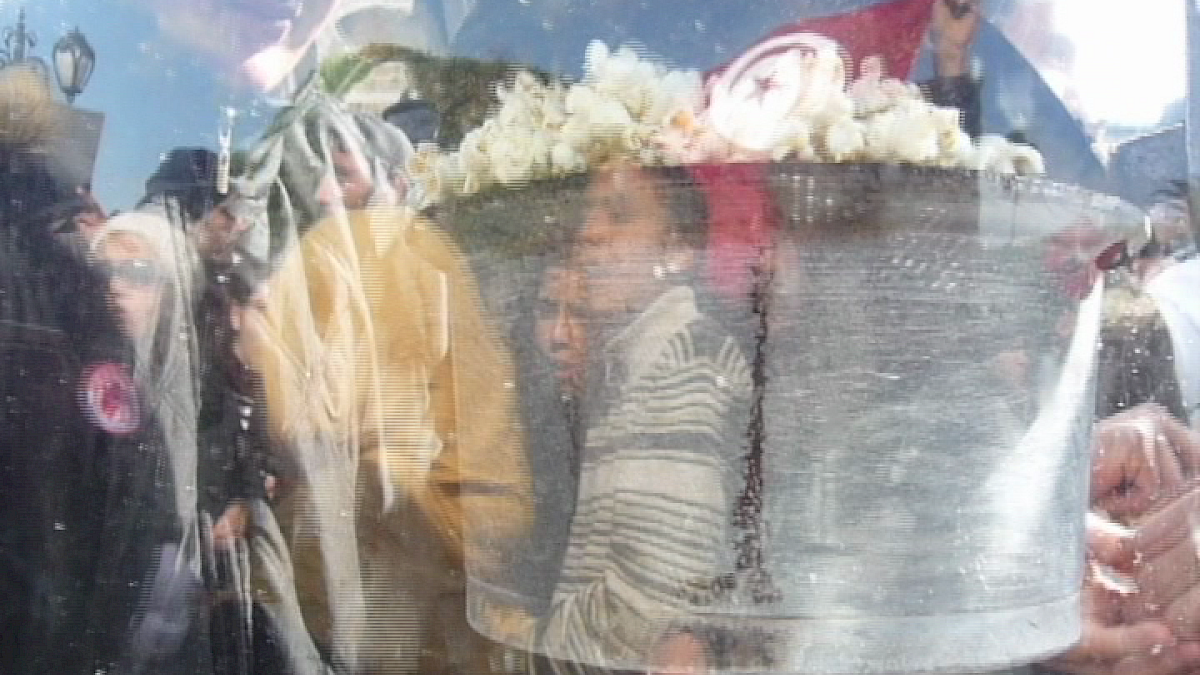
Jeannette Ehlers - Black Bullets (videostill)

For our 142nd issue of Etcetera we asked researcher Joachim Ben Yakoub and choreographer Fabian Barba to ‘decolonize’ prominent terminology of the performing arts discourse in Flanders.

co-authored with Fabian Barba for Etcetera

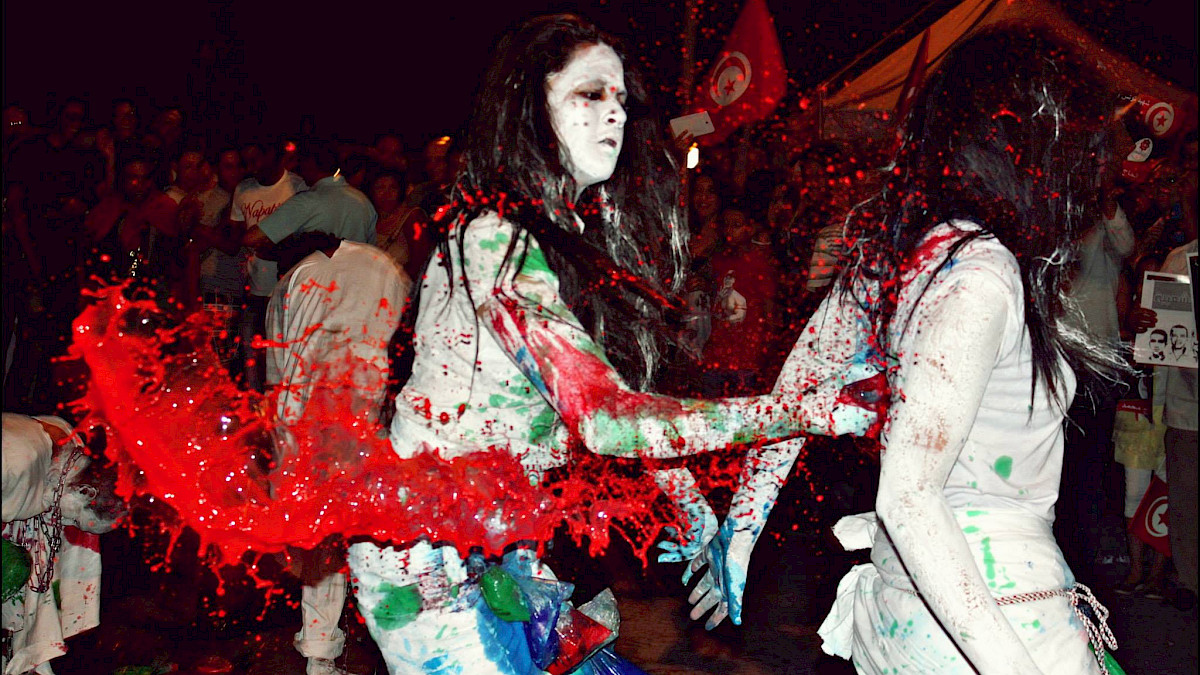
Decolonize the mind! Researcher and activist, Olivia Rutazibwa, introduced the proposition in Belgium during a TED talk in 2011. It spread like wildfire and various stakeholders in civil society engaged with this challenging invitation.  Ngugi wa Thiong’o stated in his homonymic book 25 years ago already that it is required that opression – and liberation – are expressed in one’s own terms and language.  Artist and activist Jamila Channouf coupled the action to the words and officially buried the Dutch words “allochtoon & autochtoon”, with a collective funeral to launch the ‘Ghent Spring’ (2013), an artistic grass roots movement. Backed by the decision of newspaper De Morgen to eradicate the same two words, she delineated the terms in which the debate would be conducted in Ghent and partly in Flanders too with this performance in public space. She offered us a first step towards the decolonization of our imagination. As a following step we propose to re-examine 5 words central inthe vocabulary of the performing arts today in Flanders today: superdiversity, talent development, canon, contemporary and performance. Before we start with the analysis of these 5 key concepts, we will elaborate shortly on why this process of decolonization is so necessary in Flanders and even more so in the field of performing arts.

In its most explicit and formal manner, in most regions of the world history is almost liberated from colonialism as a historical process of foreign invasion and permanent occupation. Officially, colonial time is ‘over’, but ‘coloniality’ as a power-structure is definitely not. Sociologist Aníbal Quijano defines this specific form of power as political, social and cultural relations of domination. As a logic of domination, coloniality is still widespread and accounts for the continuous opression of different cultures and their imagination. As stated by political philosopher Achille Mbembe in Sortir de la grande nuit, while colonizing Africa, Europe was also auto-colonizing itself, its structures of knowledge and being. In Belgium too this phenomenon is still very much present. This is tangible for people on the darkened side of our society, but it is also true for the privileged population. As Olivia Rutazibwa stated in her TED-talk: “the mindset that made it possible for us to have the colonies is still very much alive and is very much present in our societies today. It makes discrimination and racism not only possible, but also acceptable and invisible.”

To take the suggestion by Thiong’o seriously, namely that decolonization requires expressing oneself in one’s own terms, everybody should accordingly become aware of the colonial violence that protects our lifestyles, and of the way in which this colonial violence finds its justification in knowledge division and categorization we have internalized through our education and other knowledge systems. It is about time that we become aware of the need to listen to and to enter into dialogue with the voices that are too often implicitly silenced. Coloniality is deeply entangled with Modernity. Postmodern critiques, as valid as they are in different domains and perspectives, do not manage to address this deep entanglement. We are still dumb, deaf and blind to the historically installed difference, because we do not embody it. We cannot imagine an exterior, let alone an alternative to modernity, therefore we cannot hear the voices of the oppressed that are grounded in non-modern genealogies. The sphere of arts and aesthetics today is for these same reasons trapped in the same logic. The arts – and the performing arts in particular – have been especially sensitive to topics like diversity and discrimination in Belgium. Much more than other spheres in society, there is a form of critical thinking about these themes. The locus of enunciation, the place where we stand historically and culturally, however, remains grounded in postmodern critical thought that has its limits and blind spots.

Decolonization is a possible way out of this (post)modern fata morgana: as a process that starts from the subjectivity of those who are living in its shadows of modernity, healing from the humiliations and the wounds of coloniality, it sheds light on what is outside of the global totality. Set up as generous gifts from within the structures that continuously reproduce the same (post)modern discourse, diversity and emancipation processes are doomed to fail. They systematically ignore the quest of the outsider for ways to cure the colonial wounds, overcome imperial subjugation, and interconnect the multitude of subordinate histories and their related subjectivities.

As political philosopher Walter Mignolo suggests, ‘delinking’ is the condition that determines the direction of possible processes of decolonization. This disconnection is decisive to re-articulate our bottom-up understanding and way of standing in the world. Throughout this process, that which has been kept silence becomes audible, that which has been obscured visible once again. It is a fundamental rethinking of our subjectivities in a non eurocentric way, that leaves our individualism far behind, and makes space for new communalities and ways to re-existence.

Superdiversity

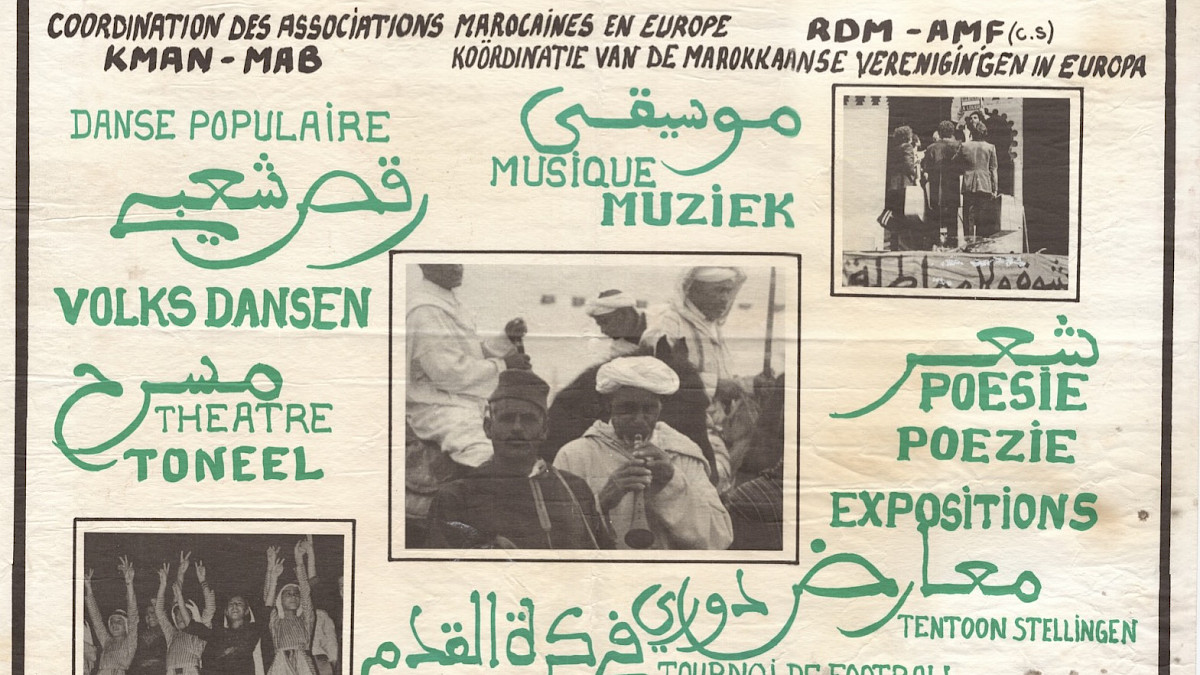
Shortly after black Sunday in 1991 a multicultural, bottom-up approach to diversity was proposed to acknowledge the plurality and sovereignty of cultures and visions on the world gainst the universalistic and eurocentric excess in society at large . This also happened within the artistic context: the different sensibilities to engage oneself in artistic forms were affirmed. At the same time multiculturalism was strongly criticized for its cultural relativistic and essentialist pitfalls. A general and global political recuperation further hollowed out the discourse of multiculturalism, followed by the political deathblow in the form of a consensual political statement of “the failure of multiculturalism”. This statement paved the way for hitherto dormant nationalist, populist and conservative powers. Critique on this turn was preventively sidelined with the sole argument of ‘political correctness’ and ‘patronizing’.

As a way out of this obscure trap the layered concept of “superdiversity” was proposed as a new paradigm to encompass the complexity of diversity. It emphasizes the diversification of diversity in the global era, with its new digital communication technology and renewed mobility. As conceived by its founder, social anthropologist Vertovec, superdiveristy is understood as a dynamic interplay of variables among an increased number of new, small and scattered, multiple-origin, trans-nationally connected, socio-economically differentiated and legally stratified individuals with a migration background. Though we acknowledge indisputably the benefits of the new proposed paradigm (inter alia to update the western gaze by an internal fragmentation through and awareness of diversity in diversity) we question its ability as a countervailing power. What is left after diversifying all diversity? Unfortunately: again the autonomous individual, the cornerstone of our neo-liberal societies.  An illusionary subjectivity that stands in the way of every relationality.

This academic and super-relativistic proposal lacks any grounding. It is adopted by organizations, institutions and political parties, not by activist or artists, because it stands in the way of new connective dynamics, politicization and movement. Superdiversity might surely be a handy tool to understand (a part of) reality but to change this same reality, we need to dare reconsidering new relational subjectivities and political communalities. The decolonial option surpasses classical nationalist and religious divides, brings together the fundamental social and cultural political questions and relates different movements in a pluriversal process towards a horizon where different worlds are possible.

Talent development

Talent development is a term from the business industry that originally designated a function within human resource management aimed at improving the performance of individual workers. Slowly but surely it is also becoming a trending proposition in performing arts in Flanders to address the need to engage with the potentialities of new artists with a migration background operating in the margins of the performing arts circuit. Talent development in the performing arts is directed to the disenfranchised urban youth that did not connect to the regular theater circuit, the different recognized art schools, and the formal executive performing art institutions and networks, but still develop their own artistic strategies autonomously in the margins of formal institutions. Different theaters and workspaces would engage in processes of talent development to catch up with the creative energy of a growing urban diversity in a context of accelerating globalisation. The premise with initiatives of talent development is that the produced art works lack a certain aesthetic and quality, but still originate in some talent that could develop in a certain direction. When artists are systematically addressed in terms of a certain shortage of talent that could be developed and when this development discourse is systematically applied to disenfranchised groups with a migration background, often with roots in colonized countries, an alarm-bell should go off. Despite the classical Western idea of development – Bildung –  having been declared dead several times in the last decades, it pervasively persists in the form of subjectivation of the required but seldom explicitly enunciated qualities in contemporary performing arts, that in this way reasserts its moral, cultural and artistic superiority. We tend to forget that development is deeply ingrained in the ideals of modernization, which holds western democratic structure as a universal model for others to follow and emulate. Colonial thinking echoes in the linearity of development discourse,  that according to anthropologist Arturo Escobar depicts us as “advanced” and “progressive”, and the other as “backward”, “degenerate” and “primitive”. Talent development, as a discursive construction that with the best intentions wants to help emancipate the urban youth in the artistic sector, is doomed to fail, because with every approach it unintentionally reproduces an under-developed reflection of itself.

The challenge here is to decolonize the institutional structures and organizations in performing arts  engaged in talent development, first and formost the different workspaces and theatres involved in production and participation. It is time to invest in real processes of change, form a consciousness of the violence of organizational structures and architecture, and their underlying aesthetic judgments, on the base of the lived experience and in the terms of the ones who are excluded and suppressed from its different functions.

Canon

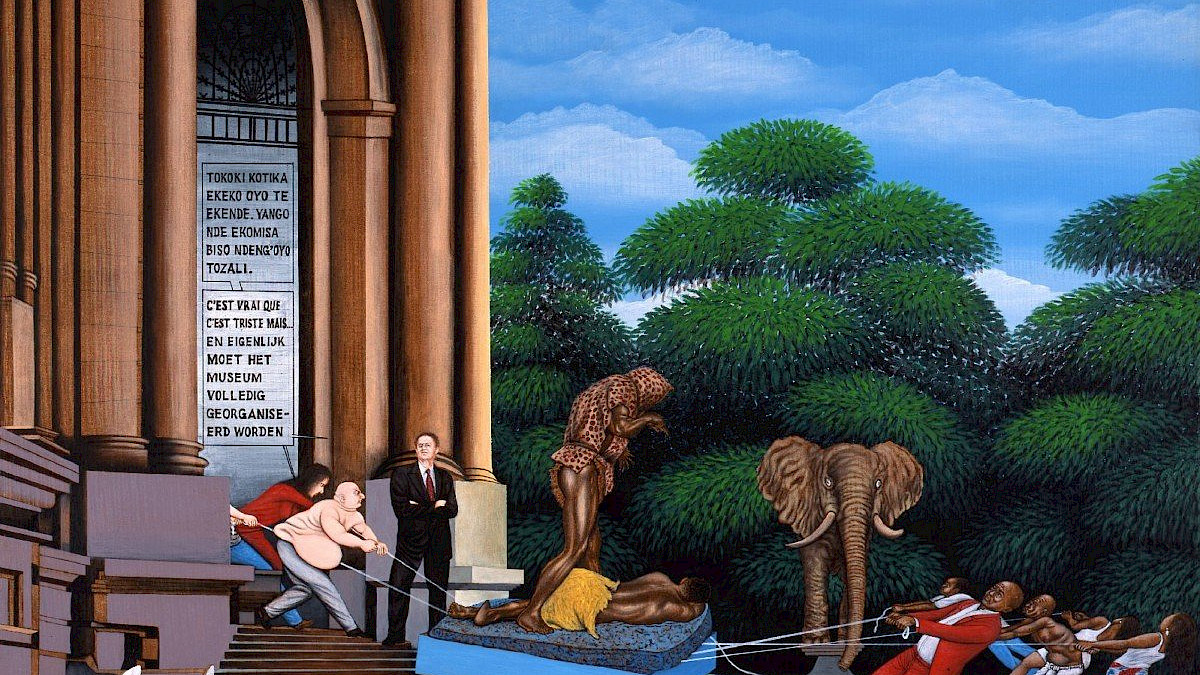
The term ‘canon’ denotes a totality of art works that have been accepted as the most important and influential in shaping our sensible understanding of the world. The canon sets the established standard, defines what can be thought of as archetypal and what can be considered worth striving for, and delineates the list of artworks considered to be of the highest quality. The canon is a dynamic and ever-actualized notion, established by a network of artists, programmers, curators, critics, public and funding committees.These often elitist networks ultimately control the field of representation of what is considered as qualitative art and what not. They determine what is presented as a model and precedent in relation to which other works of art are going to be judged or considered. As stated by Walter Mignolo and Rolando Vázquez, modern and postmodern aesthetics represent the philosophical and theoretical ground from where the canon legitimizes itself. This normative self-legitimation enables the implicit disdain, rejection and even erasure of other forms of aesthetics. Artistic movements in the global South and in the local urban margins are challenging the eurocentric boundaries of the canon by making the diversity of forms, stories and histories that have been silenced and forgotten tangible again. These movements have the potential to decolonize the canon through the unraveling of the hegemonic discourse. In this optic we not only need to pose the question what topics have been excluded thus far, and how this has shaped the world we live in. We also need to delink from the known normative points of reference, by continuously accentuating the limits of the eurocentric canon through practices of aesthetic disobedience. By the narration of alternative stories, and the rediscovery of new forms, we build up new representation fields that find their way to a multiplicity of possibilities.

Contemporary

For the performing arts, as for contemporary art, the contemporaneity of a work is – next to its ‘universality’ – one of its most cherished values. We are not going to engage in the perils of universalism, as this has already been quested in depth within well-known post-modern critique. Instead what we ask is who defines that contemporaneity and where? This becomes important if we consider that most of the artistic work that falls outside of the eurocentric canon, might be perceived as anachronistic: as something that is already done, a remnant of the past, something that is ‘passé’.

To clarify the discussion it is useful to distinguish four different interpretations of the term ‘contemporary’. We can understand it as (1) belonging to the same chronological – physical – present, (2) as being responsive to the context in which the artist works and lives, i.e.,  as a critical attitude towards established conventions and the status quo, (3) as an imperative to innovate or simply (4) as a genre.

A common pitfall is to conflate these four meanings into one, for instance ‘contemporary dance’. One reclaims for oneself all of these understandings, denying them to other artistic genres and practices. This is of extreme importance if we consider the global reach and internationalisation of the performing arts. Who decides where and for whom what is contemporary and what not? Which other temporalities are excluded by this narrowing operation, which other ways of inhabiting time are reduced into mere anachronisms and thus dismissed and made invisible?

The second problem lies in the need for constant innovation, which betrays the modern  understanding of temporality as progress: as a singular, linear and unidirectional development towards the Future. This historicist conception of Time has been criticized by postmodern thinkers and taken up by performance artists in Europe, through the renewed interest drawn by re-enactments. From other loci of enunciation however, there is always a decolonial option that embodies a different politics of time, one that rescues memory as a site of struggle, one that involves the possibility of turning ones back to the future and inhabiting the past. As stated plainly by sociologist Rolando Vazquez: “the rescue of memory is not a conservative movement, the possibility to experience the past is not essentialist, but rebellious.”

Performance

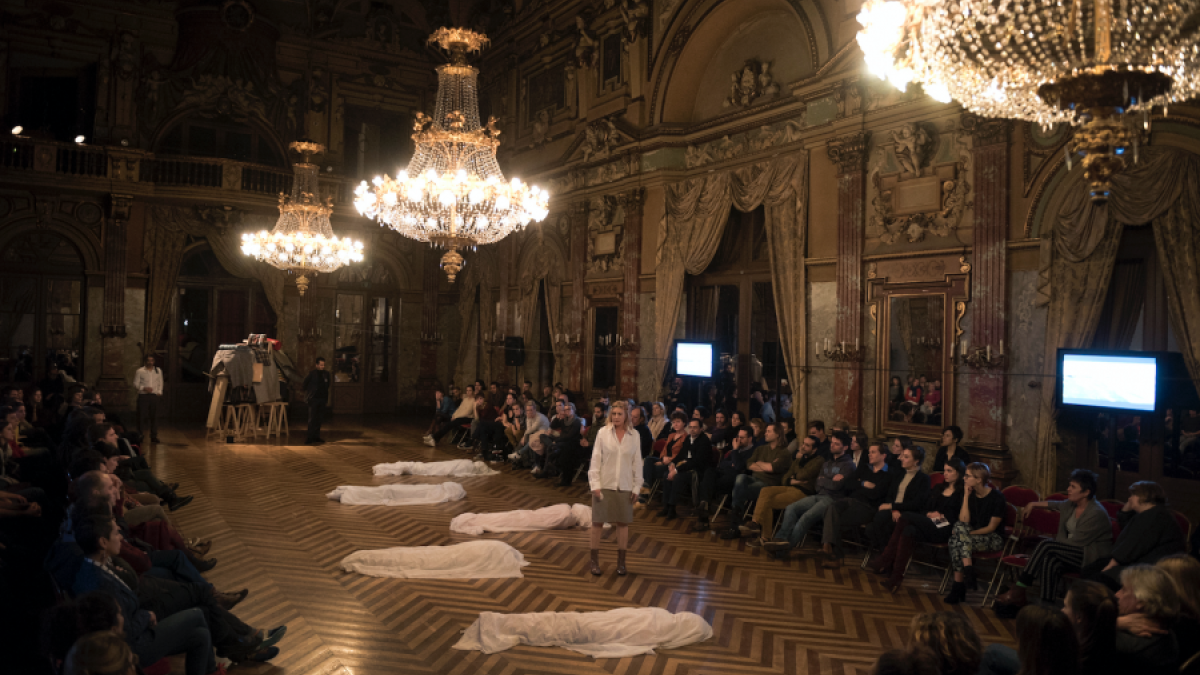
Everybodyworking in the field of performing arts might agree that ‘performance’ as an artform has a great potential to reflect upon the world we live in. Most of the problems we have briefly touched upon so far, could be the theme of a performance. Nevertheless, we might easily recognize that performance in performing arts is not a universal practice. It is important to recognize its limits, not only geographically, but also at the level of its potentialities. Performance is based on the illusion of ’the individual self’, as a construction that one can constantly enact and re-enact. Central in this understanding is the relativity, fluidity and multiplicity of ’the self’ and the construction of identity that can be subjected to a performance on stage.

Performance hides and silences in this way the historicity and relationality (and thus the privileges) behind this ever moving self – it sometimes even erases it. The black box is instrumentalized as a free, a-historical and neutral space where one can perform multiple identities. The stage as a free space positions oneself outside all power relations. The stage then cuts its modern history from its surface and flattens its consciousness and experience of reality and constrains it to the presence, in function of future possibilities and ideals. It hides as such its (post)modern delineation and inherent processes of in- and exclusion. Performing arts need not to close into oneself, but has to become aware of the colonial violence they can so easily perpetuated due to its privileged position within global networks of cultural “exchange.”

For performers that consider themselves active agents in their history of oppression there is nothing relative about performance. Its is a relational and embodied process that directs the way to re-existence through the re-mediation of history, a healing process that engages with a certain memory. The embodiment of these histories of oppression is not enacted or re-enacted, but a lived experience. When decolonizing performance, what happens on the stage is understood as an embodied process, that uncovers the veil of universalism an privileges of the black box. Performance in this sentence has the ability to provoke processes of aesthetic disobedience, challenging the hegemony of postmodern aesthetics, shifting the geography of knowing and sensing, on local and international level from the perspective of its historic alterity.

References

– Ngugi wa Thiong’o, Decolonising the mind: the politics of language in African literature, London: Currey, 1986

– Anibal Quijano, ‘Coloniality of Power and Eurocentrism in Latin America’, International Sociology 15.2 (2000): 215-232

– Achille Mbembe, Sortir de la grande nuit. Essai sur l’Afrique décolonisée, Paris: La Découverte, 2010

– Walter Mignolo, ‘Delinking’, Cultural Studies 21:2, 449-514

– Steven Vertovec , ‘Super-diversity and its implications’, Ethnic and Racial Studies 29(6): 1024-54

– Arturo Escobar, Encountering Development: The Making and Unmaking of the Third World, Princeton University Press, 1995

– Walter Mignolo & Rolando Vázquez, ‘Decolonial AestheSis: Colonial Wounds/Decolonial Healings’, in: Periscope (online tijdschrift), Juli 2013

– Rolando Vázquez, ‘Modernity, Coloniality and Visibility: The Politics of Time’, Sociological Research Online 14 (4)7
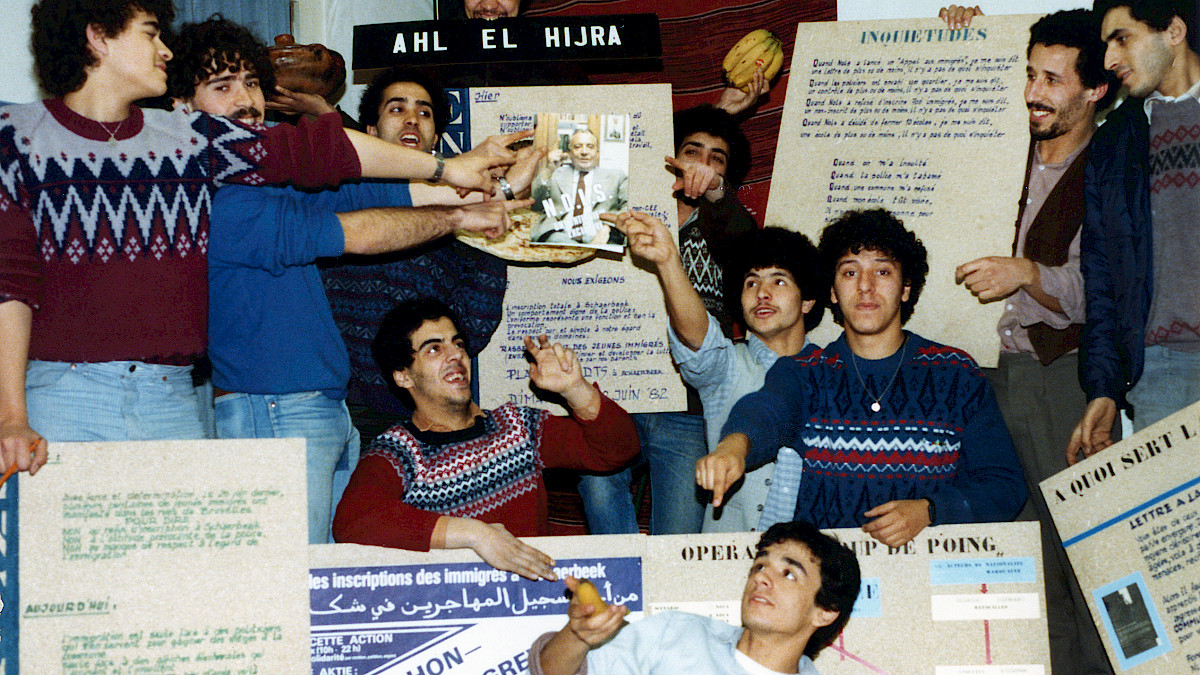
Ahl El Hijra - Qu'est ce que se passe-t-il a Schaerbeek?

What's Happening in Schaerbeek?

14-10-2025
Articles
Bruxelles
Maghreb
Mustapha Bentaleb
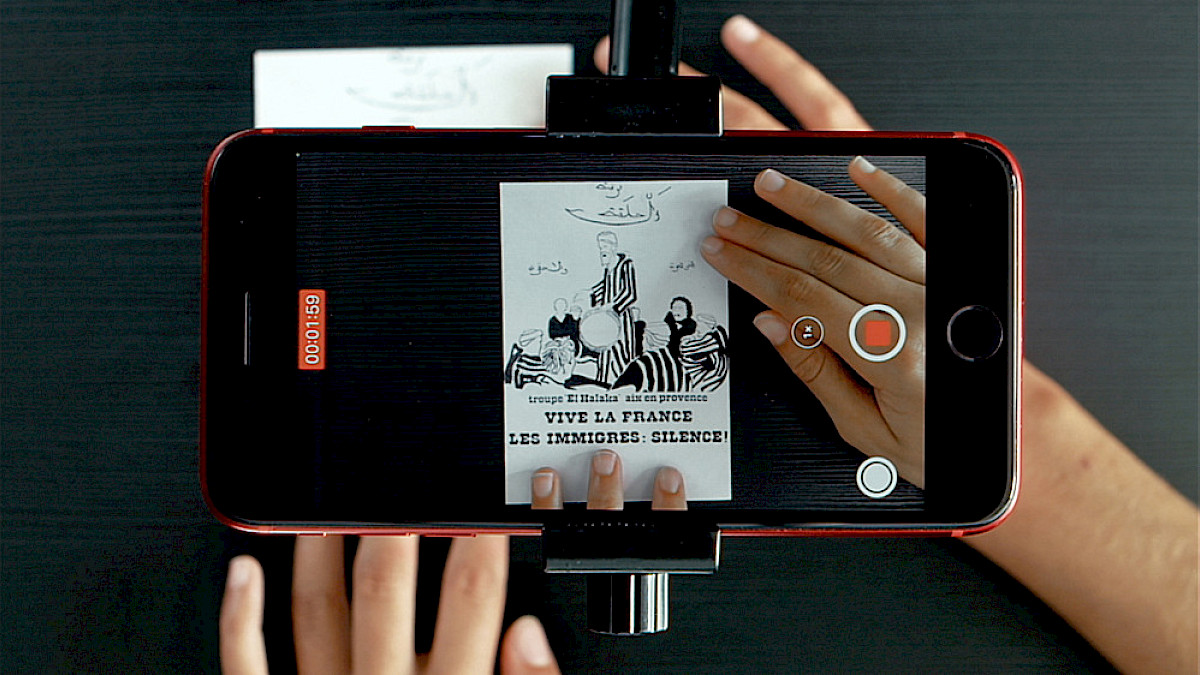
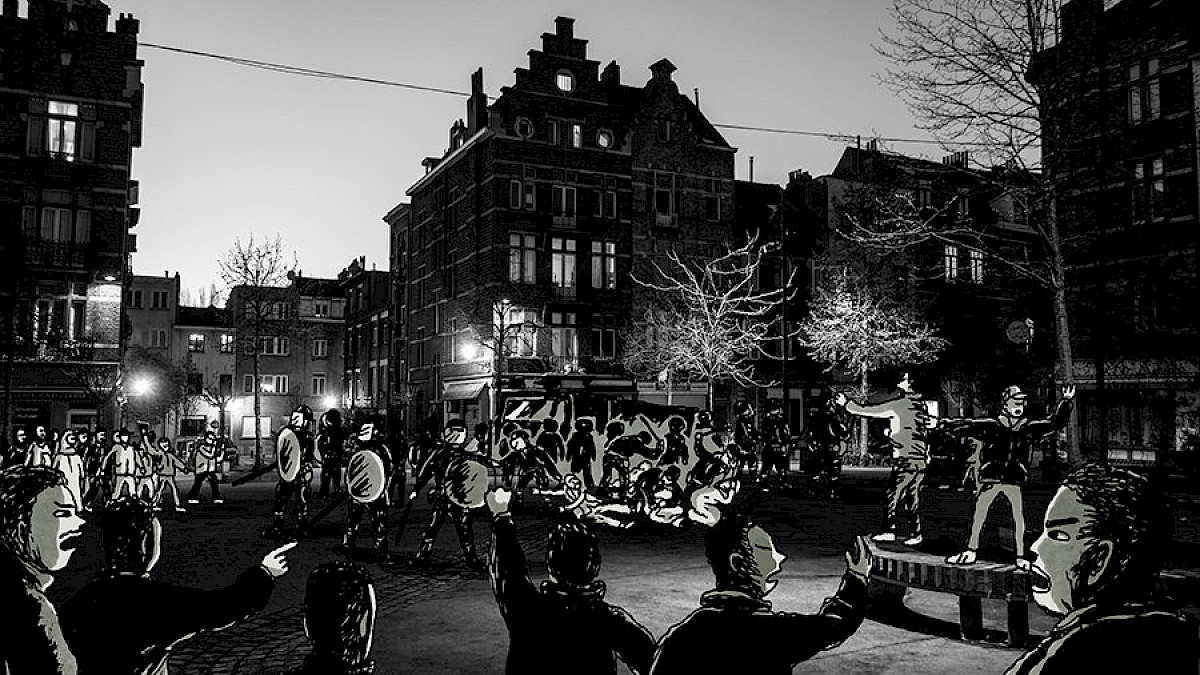
As editors, we arrived at this contribution by Mustapha Bentaleb and Joachim Ben Yakoub somewhat like latecomers to a gathering, where a conversation is already unfolding, photographs are being passed around, and old songs still linger in the air. What we encountered was not a linear narrative, but a constellation of memories, documents, names, and voices—partially preserved, partially reconstructed. The setting is a contemporary collective workspace in Brussels, known as The Kitchen. There, the authors imagine a gathering with members of the former cultural-political group Ahl el Hijra, sharing yellowing photo- graphs, leafing through copies of Tribune Immigrée, and reflecting on acts of resistance from early 1980s Belgium. This layered return—across time, media, and memory— invites us to consider not only what remains of these histo- ries, but how we reassemble their fragments in the present. At the heart of the story is Schaerbeek, a working-class district in Brussels where many Maghrebi workers settled following the 1964 labor agreement between Belgium and Morocco. In 1982, under Mayor Roger Nols, immigrant residents were systematically excluded from the municipal registry—cut off from basic social rights such as legal recognition, welfare, and access to schooling. In response, Ahl el Hijra launched a series of actions: a hunger strike, public gatherings, and a collectively built exhibition titled What’s Happening in Schaerbeek?. This contribution returns to that moment, by allowing fragments to speak. Archival photographs, interviews with a former member of Ahl el Hijra, pages from Tribune Immigrée (Issue 4, Feb.–Apr. 1982), and the protest song His Imprisoned Shadow converge to form a scattered composition ... What follows is not a definitive account, but a listening position, attuned to what surfaces when the past is reopened in the present. Taous Dahmani & Tom Viaene
Atef Maatallah

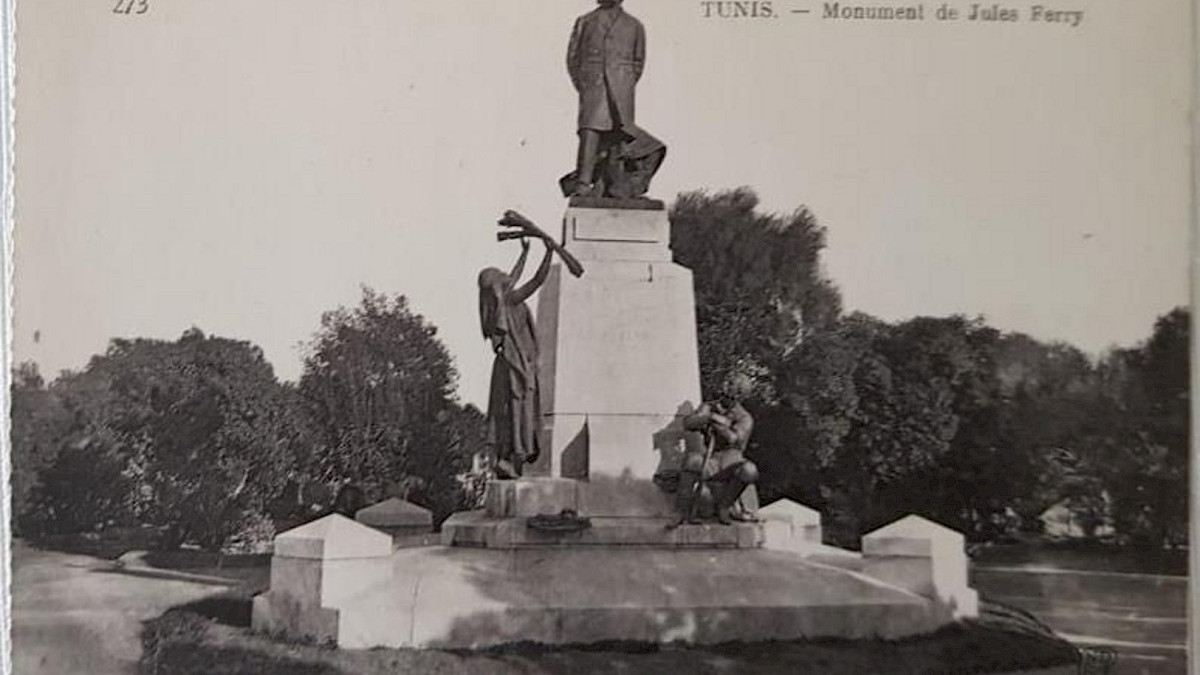
Monumental Re-Bourguibization

23-01-2025
Papers
Atef Maatallah
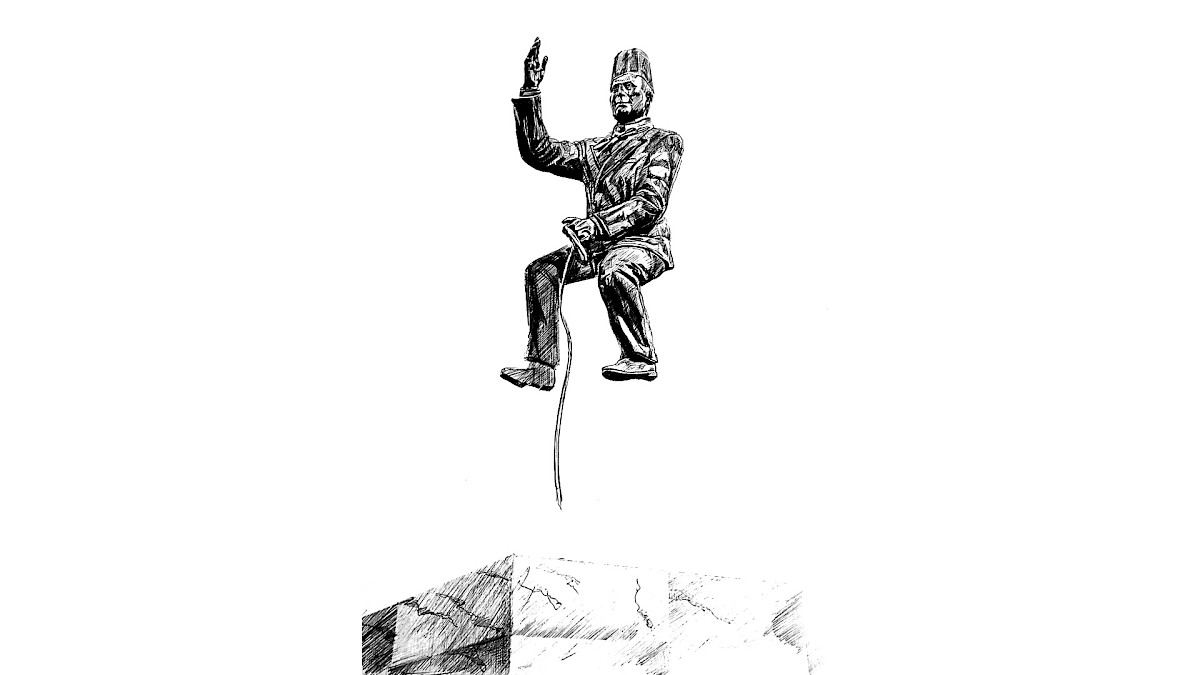
In January 2016, the first President of post-revolutionary Tunisia, Beji Caid Essebsi addressed the people, from exact the same setting as former president Habib Bourguiba’s in January 1984’s speech to contain popular revolts. In the proposed book chapter, I venture into the power dynamics proper to the constitution and reconstitution of state aesthetics in the process of monumental re-bourguibization. As the appropriation of spectacular power in different cities over Tunisia such as Sousse, Monastir or Tunis, was met with new waves of artistic resistance, my contribution to the book takes notice of the often-overseen processes through which aesthetic agency was temporarily halted by the re-emergence of new forms of authoritarian symbolic politics during the post-revolutionary phase. Based on a long-term participant observation in the field of visual arts in Tunisia between 2011 and 2017 and combining insights from aesthetic theory and various postcolonial critiques, I show how monumental aesthetics are not structured overnight. Looking into the formation of spectacular power in the longue durée, I argue that the thousand eyes that constitute contested monumental aesthetics in Tunisia are historical constructions, characterized by a palimpsestic structure that reveal its postcolonial disposition. This historically detour helps to untie the present apparent contradictions proper to the ambiguous processes of monumental de-bourguibization and re-bourguibization. Through the self-conscious, ostentatious, and aesthetic gesture of over-writing one symbolic order by another, the site of former colonial and postcolonial power is marked with at times opposing narratives and counter narratives of national becoming, forming a renewed, multilayered but contested site of postcolonial spectacular power. Published in the volume Art Against Authoritarianism in Southwest Asia and North Africa, edited by Tijen Tunali and Josepha Ivanka Wessels (I.B. Tauris, 2025
It's like a Finger Pointing a Way to the Moon

It's like a Finger Pointing a Way to the Moon

18-04-2024
Projects
Bruxelles
Tsumkwe
Moya Michael
!Amace
Be
Victoire Karera Kampire
Simon Thierrée
In It is like a Finger Pointing a Way to the Moon Moya Michael is searching for the movement of different unyielding languages. After the celebrated Coloured Swan trilogy and Outwalkers, choreographer Moya Michael proposes to dance nearby the guardians of words, movements, and rhythms she encountered in South-Africa and Namibia.  Drawing inspiration from Bruce Lee’s famous line in Enter the Dragon—“Don’t concentrate on the finger or you will miss all that heavenly glory!”—Moya Michael sets out to explore the worlds of words, movements, and rhythms she encountered in South Africa and Namibia. After spending time with !Amace, Be, and their Ju/'Hoansi family, she joins forces with artists Victoire Karera Kampire, Simon Thierrée, and Joachim Ben Yakoub. Through the precise use of image, movement, and sound, a liminal space of ongoing transformation is created, inviting reflection on oral tradition and survival. Together, they delve into the movement within different unyielding languages. Guided by Bruce Lee’s allusion to an old Zen Buddhist wisdom in his seminal film Enter the Dragon, “Don’t concentrate on the finger or you will miss all that heavenly glory!”, she proposes to move with what we cannot fathom. To disappear in order to preserve the words that precede us, that never left us. To transform in order to keep what came before us.   CREATION Moya Michael IN COLLABORATION WITH Victoire Karera Kampire, Simon Thierrée, Joachim Ben Yakoub SCENOGRAPHY Špela Tušar COSTUME DESIGN Andrea Kränzlin VIDEO Victoire Karera Kampire SOUND DESIGN Simon Thierée LIGHT DESIGN & DIRECTION Ellie Bryce SOUND Patrick Van Neck DRAMATURGY Joachim Ben Yakoub STAGE MANAGER Caroline Wagner PRODUCTION MANAGER Lise Bruynseels  DISTRIBUTION Cecilia Kuska PRODUCTION KVS COPRODUCTION WIELS, Perpodium, Bergen Kunsthall       
The Question of Funding

[Kitchen Broadcast] On ways of hosting, (under)commoning and insituting otherwise

01-06-2023
Conversations
Palestine
Bruxelles
Belgrade
Ramallah
Bojana Cvejić
Yazan Khalili
Reem Shilleh
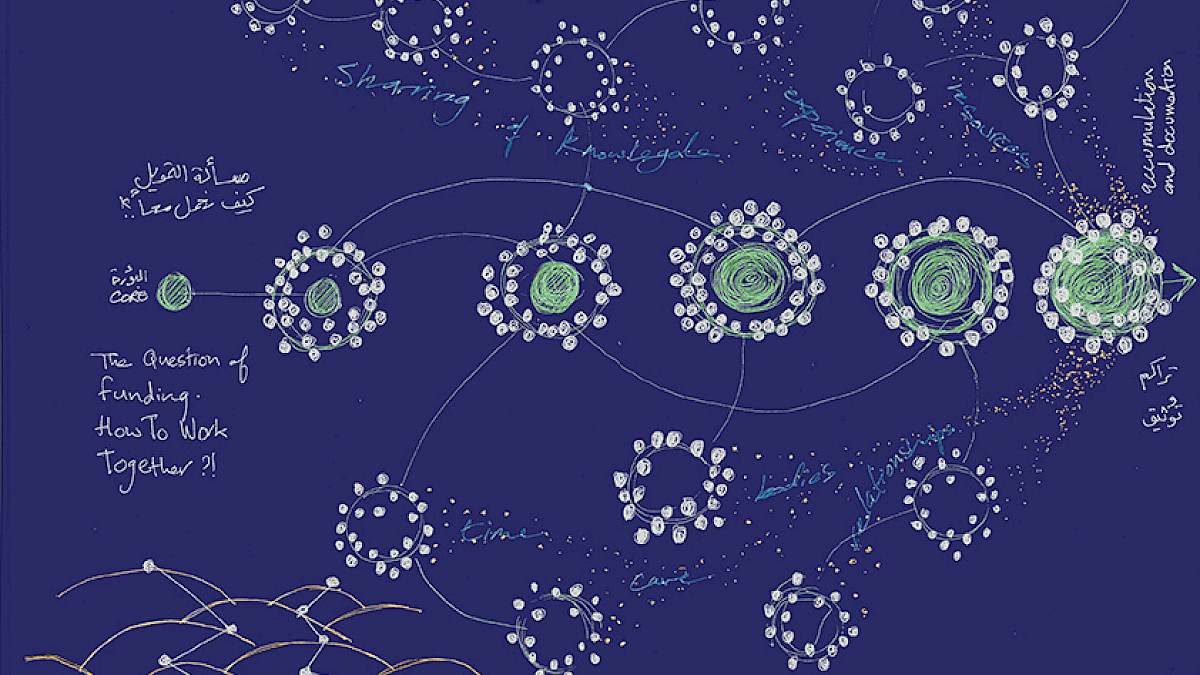
For the fourth episode of Kitchen Broadcast, we had lunch with Bojana Cvejic and Yazan Khalil and took the time to talk and exchange ideas about the infrastructural conditions and ways of hosting, (under)commoning and insituting otherwise, starting from both their practices in setting up different spaces and places. Bojana Cvejić is on of the co-founders, together with Jan Ritsema and still an active member of PAF (Performing Arts Platform)a residency in a small villange St Erme in France close to the Belgian border. She is also, among many other things, active in TkH (Walking Theory platform) an independent, institutionally non-aligned, extra-academic platform for performing theoretical-artistic activism. Yazan Khalili engaged in the transformation of Khalil Sakakini Cultural Center in between 2015 and 2019 in Ramallah, Palestine, and continued his reflections on processes of instituting through different projects, among many other things, the QAF or the Question of Funding and Aka, a space hosting a decentralized network of self-organizing and grassroots collectives in Kassel. Kitchen Broadcast is an ongoing online conversation that proposes to listen to different voices, different rhythms and different sounds, reflecting on present situations that intersect in Brussels, composed by Joachim Ben Yakoub and Reem Shilleh. It is produced with the kind support of Kaaitheater, a stage for dance, theater, performance, music and debate in Brussels.
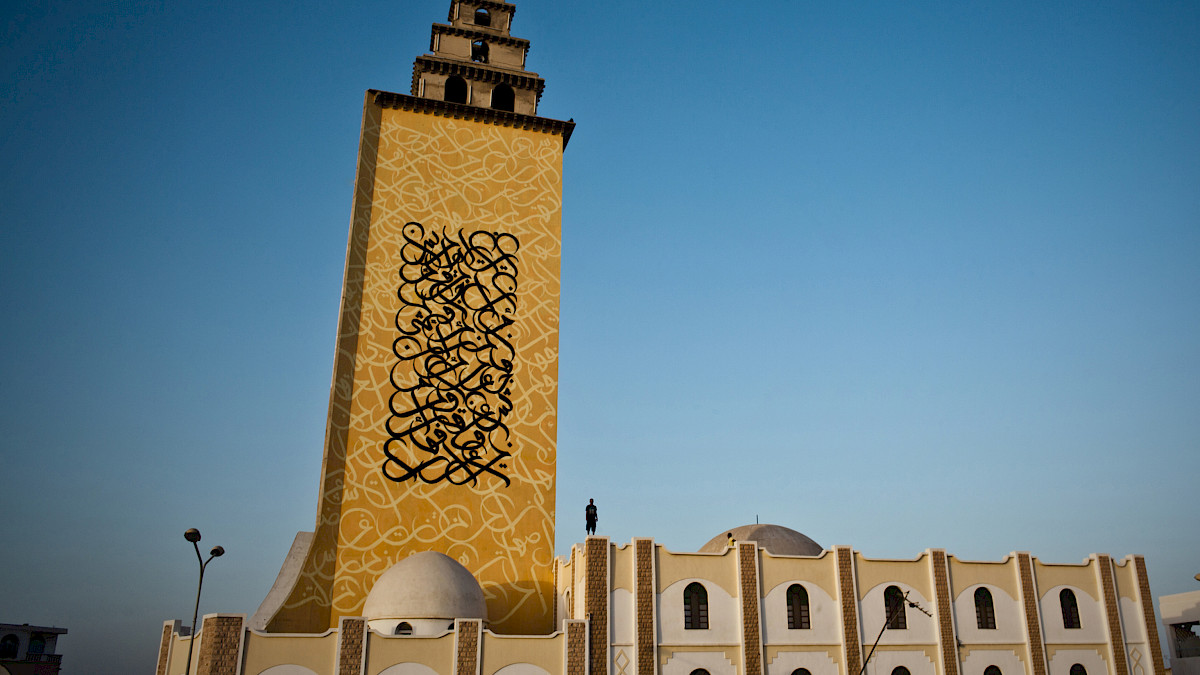
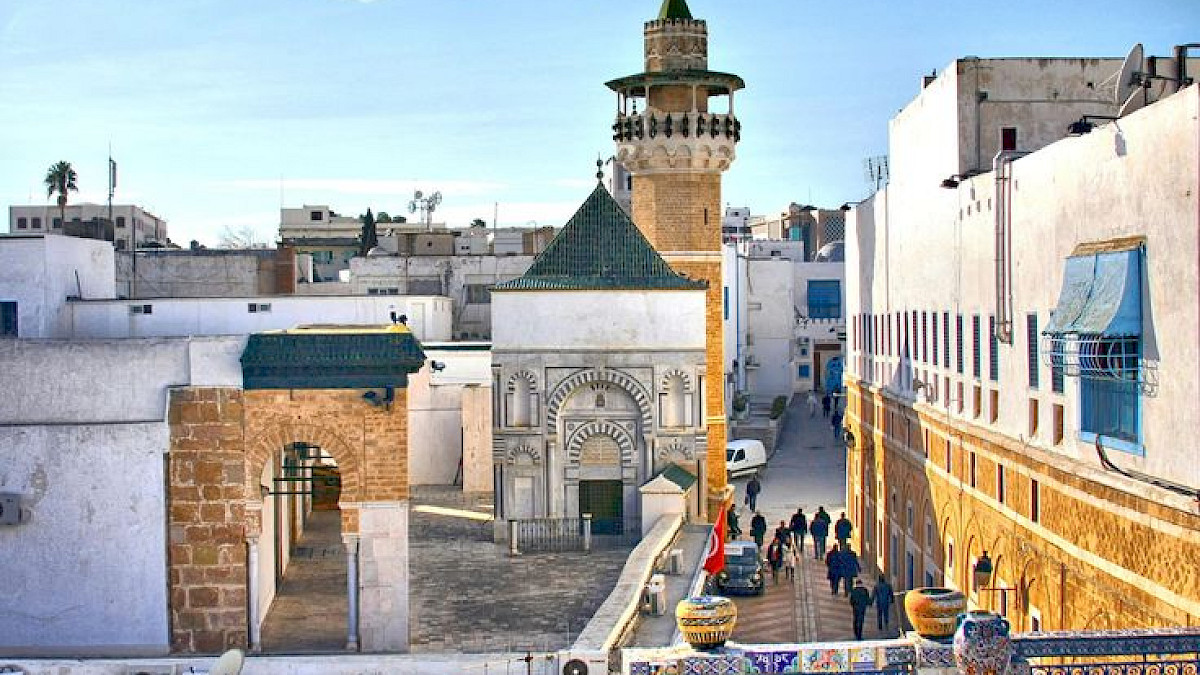
Jara Mosque by El Seed - Ouahid Berrehoumav

Turning a City Inside-out

07-07-2022
Papers
Tunisia
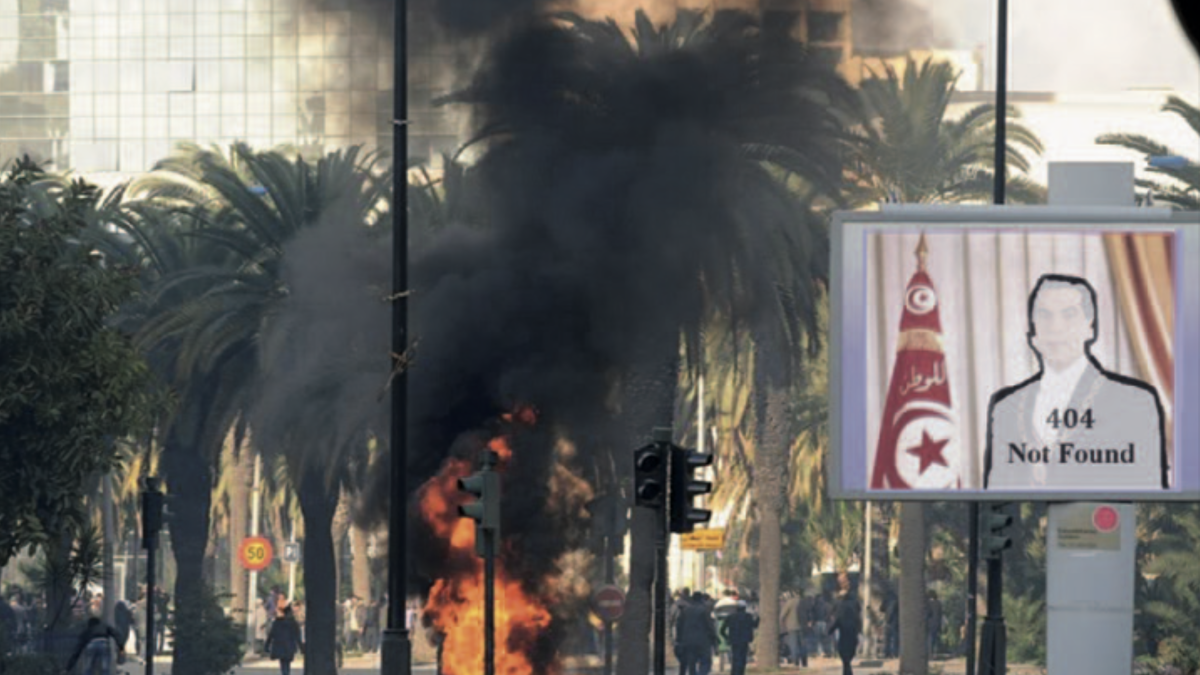
The spatial dynamics were difficult to overlook during the 2011 movements of revolt in Tunisia, pushing the damned in the center of public attention in the concerted effort of turning prevailing authoritarian politics inside–out. Venturing in the spatial contestation central in these revolts, the mesmerizing occupation and re-appropriation of symbolic places, such as the Kasbah Square or Bourguiba Avenue took center stage. These movements of occupation and re-appropriation of spatial power produced momentous heuristic enclaves of another order, projecting dreams of a renewed inclusive free and dignified body politic. Based on a long-term research in the field of visual arts in Tunisia between 2011 and 2017 and the combination of various postcolonial critiques, this article demonstrates the way in which violent processes of destruction preceding these processes of re-appropriation and occupation are too often overlooked. Police stations, the presidential personality cult and the private estate of the authoritarian regime are identified and treated as spatial nodes that maintain the compartmentalization and fragmentation of urban space in place. Moreover, by including in the analysis the often-omitted Islamist occupation and re- appropriation of mosques and public space contesting the ongoing constitutional political dynamics, this article elucidates why the revolutionary process failed in the production of a long aspired liberated and dignifying space, as the revolutionary re-appropriation of these symbolic nodes of power was not included in any political agenda.

La naissance d’une pensée et d’une pratique-autre en Tunisie post-révolutionnaire

01-07-2021
Papers
Malek Gnaoui
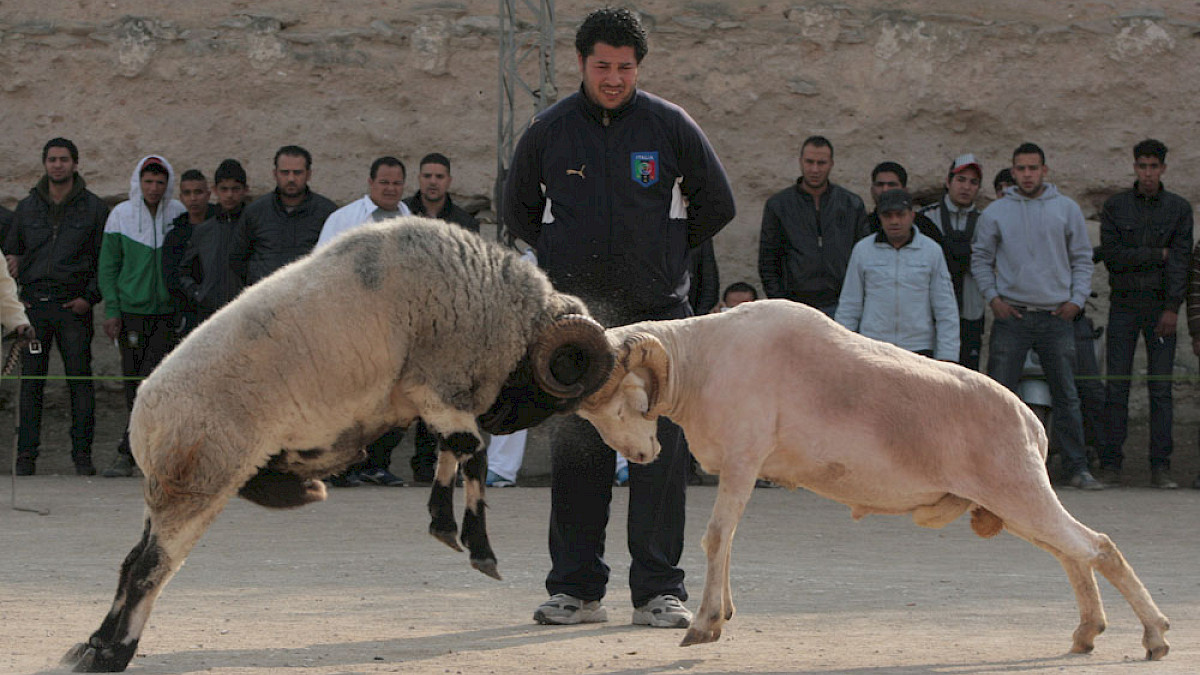
Dans un premier temps, je voudrais approfondir la figure du mouton noir dans l'œuvre de Malek Ganou, et ceci en relation avec un contexte politique précis : les diverses controverses liées à la relation tendue entre une liberté nouvellement acquise et les collectivités militantes islamistes fraîchement constituées – ce qui interroge les limites du sacré dans l'espace public. Dans un second temps, j’examinerai la performativité de l'installation vidéo mobile Dead Meat Moving et sa relation au geste du sacrifice, en réimaginant le mouton noir à travers la figure du corps précarisé et étouffé des damnés de l'histoire tunisienne, trop souvent réitérée dans la figuration du harrag, martyr ou djihadiste, trois subjectivités sacrifiées aux frontières globales de la postcolonie. Ensuite, j’analyserai le Black Show, qui illustre parfaitement ce qu'Abdelkebir Khatibi1 appelle une double critique, nécessaire pour affronter des constellations politiques complexes et violemment conflictuelles. Enfin, je rapproche les deux éléments du diptyque, non pas pour condamner le jeu populaire des combats de béliers, ni le rituel religieux candide et profondément significatif mais, bien au contraire, afin de démontrer comment, dans leur composition performative, Dead Meat Moving et le Black Show ont réussi à transformer ce qui est désapprouvé, marginalisé et désolé, en ce que Homi Bhabha appellerait un tiers-lieu critique et sensible, permettant l’apparition non seulement d’une pensée- autre, mais aussi d’une pratique-autre post-révolutionnaire trop souvent réduite au silence et donc inouïe. Un Chapitre publier dans le livre Attaques # 3. (2021, p.323-343)
Mohamed Bourouissa- Brutal Family Roots (c) Selma Gurbuz

Meandering in a Land of Selfless Love

30-06-2021
Articles
Hasselt
Algiers
Martinique
French Guiana
Mali
Silvia Franceschini
A walk through the exhibition “Le Déracinement. On Diasporic Imaginations” In spring 2021, Z33 – House for Contemporary Art, Design & Architecture in Hasselt, Belgium hosted the exhibition Le Déracinement: On Diasporic Imaginations. Curated by Silvia Franceschini and including work by artists Mohamed Bourouissa, Kapwani Kiwanga, Raphaël Grisey & Bouba Touré, Mathieu Kleyebe Abonnenc, Fatma Bucak and the Otolith group, the whole visual dispositif of the exhibition was centered around French sociologist Pierre Bourdieu’s photographic work, produced in Algeria between 1958 and 1961.  Upon visiting, I wondered how an exhibition revolving around the photographic work of a sociologist such as Bourdieu might relate to intrinsically colonial dynamics of uprooting and displacement. But also how a curator operating in an art institution such as Z33 might relate to such a sensitive and thorny topic as diasporic imagination, in the intrinsic contradiction of showing this work within such a—at times violent—context of an institutionalized museum. Nonetheless, I decided to put that set of questions aside for a moment, and surrendered myself to the challenging winding path set out by Silvia Franceschini. My understanding of the process of uprooting and diasporic displacement eventually turned inside out, moved from the liberated land of Algeria and Mali, via the still colonized overseas departments of Martinique and French Guiana, over the hearth of British Empire through the Black Atlantic to end in contemporary war-ridden Syria.
Sacré Printemps! CHATHA

Kitchen Broadcast: Exiger des transformations historiques quelque part entre le Maghreb, Paris et Bruxelles

17-12-2020
Conversations
Tunisia
Bruxelles
Paris
Nidhal Chamekh
Hela Yousfi
Mohamed Toukabri
Reem Shilleh
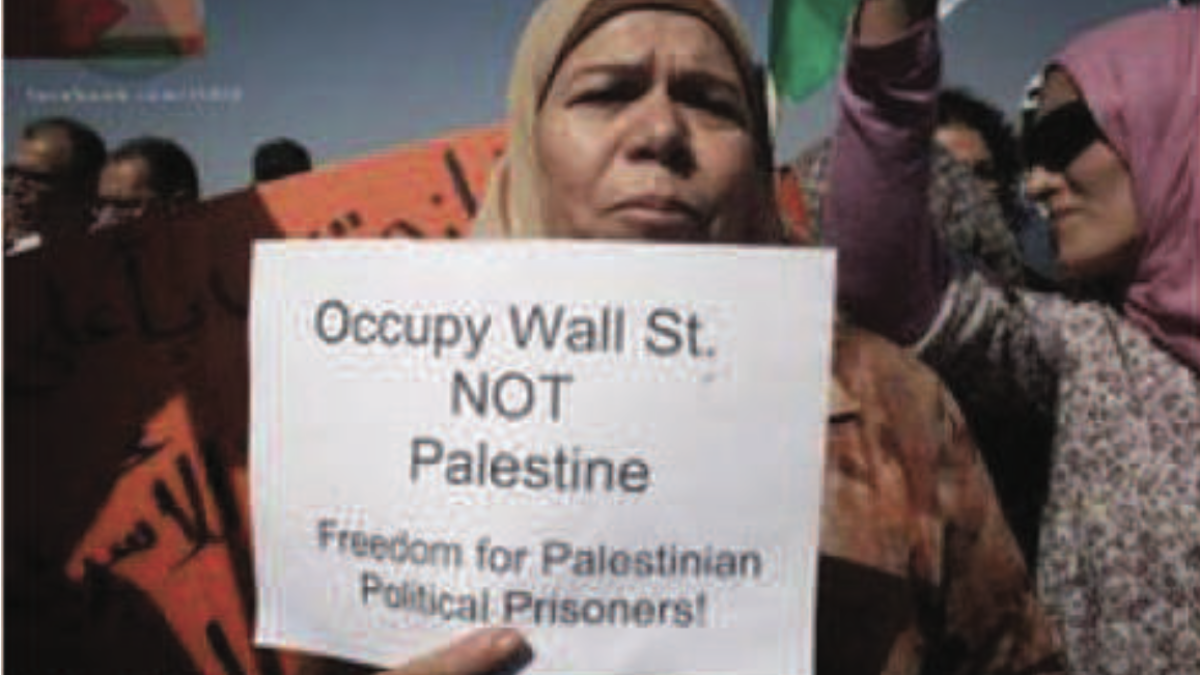
Kitchen Broadcast est une émission radio en ligne programmée par Joachim Ben Yakoub et Reem Shilleh. Avec la participation de Hela Yousfi, Mohamed Toukabri et Nidhal Chamekh, ce dîner Kitchen Broadcast propose une réflexion critique sur les remises en question postcoloniales et la promotion de transformations historiques – quelque part entre le Maghreb, Paris et Bruxelles. Il y a précisément dix ans, en décembre 2010, la Tunisie a embrasé le monde. De la Kasbah de Tunis à la place Tahir du Caire, de la plaza del Sol à Madrid à la place Syntagma à Athènes au centre du monde capitaliste de Wall Street, la terre entière était « occupée » par n sentiment d’indignation. Alors que les demandes de liberté ont été aisément satisfaites par des réformes démocratiques cosmétiques, les demandes de pain et de dignité restent lettre morte. Toutefois, l’autoritarisme mondial, alimenté par des violences policières, du racisme et de l’islamophobie paraît progresser, également en Europe. Contrairement à Bruxelles et à Paris, la décolonisation n’est pas (encore) une métaphore au Maghreb. Après près d’un siècle et demi de domination coloniale, six décennies de gouvernance postcoloniale et à présent dix ans de révoltes au Maghreb, les demandes décoloniales peuvent y sembler caduques de prime abord, au mieux anachroniques. Néanmoins leur timide résurgence actuelle dans les discours d’une minorité diasporique témoigne d’une possible reviviscence. Il est grand temps de mener une discussion en profondeur.

Revolting Senses. The contrapuntal Aesthetics of Revolt in Tunisia

21-11-2018
Books
Tunisia
Combining key insights from aesthetic theory and various postcolonial critiques, this research looks into the aesthetics of revolt. Taking the recent and exceptional sequences of revolts in Tunisia as a case study and thus starting from an extensive and unique fieldwork, and by unraveling contrapuntally the complex entanglement of processes of politicization of aesthetics and the aestheticization of politics, revolting senses show how state aesthetics are always historically formed and how the sensible, or that what can be seen, imagined or embodied, is consequently shared, divided and distributed, but also how accumulated aesthetic agency can question and possibly alter this shared distribution in times of revolt. This study apprehends revolt in a phenomenological way as a lived, embodied and visual experience and thus as a process of diversion or reappropriation of spectacular power. It contends that revolt has the potential to alter a given police order. Nevertheless, the often too precipitated contentions that the moving body politic would have radically altered the order of the sensible, during the latest sequences of revolt in Tunisia, is altogether tempered. This dissertation points at the intricacies that accompany the processes of revolt against a firmly seated police order, especially the difficulty of creating different conditions of intelligibility and possibility that entail a fundamental transformation of what appears to sense experiences. These particular intricacies could somehow have been foreseen as aesthetics was explicitly grasped as a historically formed contrapuntal ensemble or as an all-encompassing realm that is made of different intermeshed, overlapping, and mutually embedded histories traversed by a colonial divide.

Performing Self-sacrifice, Despite Everything or Despite Oneself?

04-10-2018
Papers
Fanni Roghman Anni
Danceurs Citoyens
The authoritarian regime in Tunisia can be defined as an intensive bio-political regime where disciplinary techniques of surveillance and governmentality are entangled with sovereign logics of exceptionality and decisionism. Authority and power is woven through every aspect of everyday life and to exceptional instances of the power over life and death. Within a bio-political imperative, the body must constantly be managed, governed and controlled. The body is therefore at the same time the strongest medium to enact protest. In this light, we can read the self-sacrifice of the different martyrs during the liberation phase of revolution as a potent symbol of disruption of the expected cooperation of the body within bio-political power that allowed for the appearance of the people in all its complexity and diversity, including the life of the most disenfranchised. Comparing the performances of Fanni Roghman Anni and Danseurs–Citoyens, two different collectives that emerged during the revolution, the performance of self-sacrifice will further be analyzed as a condition for the coming into being of a necro-political space of appearance. Not only the bodies in the street but additional embodied artistic performances during the constitutive phase of the revolution produce extra-discursive effects outside the bio-political logic, that allowed to further engage in fundamental ethical question in the future constitution of new post-revolutionary body politic. Published in the volume edited by Gržinić Marina and Aneta Stojnić, Shifting corporealities in contemporary performance: danger, im/mobility and politics. (Springer, 2018: pp 251–274)
Selma @ Sofian Oussi - Here(s)

The Dream Collaboration

07-07-2018
Articles
Tunisia
Bruxelles
Selma Ouissi
Sofiane Ouissi
The online dance performance Here(s) of the inseparable artist duo Selma and Sofiane Ouissi took place in October 2011 during the opening of the Meeting Points 6 festival, an initiative of the Young Arab Theatre Fund. Sister and brother Sofiane en Selma gradually formed - from one performance to the next - a single body through their shared practice as dancer and choreographer, until Selma moved to Paris and Sofiane was left alone in Tunis. Thanks to real-time video communication applications, they managed to bridge the distance between both metropolises and thus found a way to reconstitute their shared practice and reflection. During Here(s) they share this initially rather practical communicative bridging, which gradu- ally grew into a full-fledged choreography. In what follows we will delve deeper into the question how this performance touches on the essence of current global challenges in a clear, refined manner. Subsequently, the Meeting Points festival, in which this performance took place, will be seized in order to linger on the necessity to review existing practices transnationally, to anchor them sustainably and lastly, to interweave them from below with other relevant local diasporic practices. Throughout this exercise I hope to touch upon possible pitfalls in setting up collaborative relations with the MENA region from the privileged position that the capital of Europe, at least for now, still enjoys. The main challenge will be to understand the apparent contradiction between different types of global and local dynamics and thus to discern the importance of their inevitable entanglement and to take into account its political implications. A necessary exercise, certainly now Tunisia is included in the Creative Europe programme

Moving Bodies in the Streets of the Heart of Tunis

15-10-2015
Articles
Sofiane Ouissi
Selma Ouissi
Tunisia 2014, almost four years ago, the people took the street and sent the autocratic ruler packing in the direction of Mecca. The performativity of bodies in the street in all their plurality laid claim and occupied the symbolic public space of the Kasbah, forming a collective body defying the established body politic, until the demand of the dissolution of the political structures in power was met. Four years later life regained a semblance of normality. However, the sudden historical transformation brought the political back in the center of the public sphere and encouraged dancers and performers to sporadic reinvest public space. The altered political context makes visible key political aspects and conditions of embodied artistic performances in the public space. By closely analyzing different cases of bodily interventions in public space, we hope to strengthen our understanding of the political role performances can play in a revolutionary context.The findings further elaborated in this article are mainly based on an intensive participatory observation during a Euro-Mediterranean artistic training late in 2014 in Tunis, organized by the Fai-Ar, the European Center for Artistic Training in Public Space and the L’Art Rue Association, initiator of the Dream City Biennial of Contemporary Art. The research-oriented but practice-based training was initiated in the local context of Tunis’ medina on the theme of “Conflicts and Resistance: The Artist Citizen and the Tunisian Public Space”. Artists studied public space in its relation to pictures and images, materiality, voice and sound, dramatic writing and staging, the body and movement. As I did in my participatory observation, in this article I focus on the body and movement in public space. I will gradually develop my argument relying on my lived, embodied and shared experience with other participants of three illustrative performances initiated during the artistic training.

Superdiversiteit en Democratie

30-01-2014
Books
Bruxelles
Antwerpen
Gent
Ico Maly
Jan Blommaert
Vertrekkend vanuit onderzoek naar en in stadswijken concluderen de auteurs dat zelfs de vlag ‘multiculturele maatschappij’ tekortschiet om de diversiteit van de hedendaagse samenlevingen te begrijpen. ‘Vlamingen maken na 22 uur geen lawaai meer. Ze spreken Nederlands, zijn punctueel en vinden gezondheid heel belangrijk. De Vlamingen leven niet op straat, ze houden van rust en stilte.’ Zo schetste de Vlaamse overheid in zijn legendarische ‘starterspakket Inburgering’ het beeld van ‘de Vlamingen’. Zouden er vandaag nog mensen rondlopen die deze karikatuur ernstig nemen? Vertrekkend vanuit onderzoek naar en in wijken in Brussel, Antwerpen en Gent concluderen Ico Maly, Jan Blommaert en Joachim Ben Yakoub dat zelfs de vlag ‘multiculturele maatschappij’ tekortschiet om de diversiteit van de hedendaagse samenlevingen te begrijpen. Door toegenomen mobiliteit, globalisering en het internet is de wereld en ieders leven grondig veranderd. Daardoor moeten we onze democratie herdenken, verbeteren en verdiepen.  Ico Maly is doctor in de cultuurwetenschappen, coördinator van Kif Kif en gastprofessor aan het Rits. Hij schreef o.a. N-VA. Analyse van een politieke ideologie (EPO, 2012).Jan Blommaert is hoogleraar taal, cultuur en globalisering aan de universiteiten van Tilburg en Gent. Hij publiceerde o.a. De heruitvinding van de samenleving (EPO, 2011).Joachim Ben Yakoub is stafmedewerker beeldvorming en diversiteit bij de Pianofabriek in Brussel en doctoraal onderzoeker bij de Middle East And North Africa Research Group.